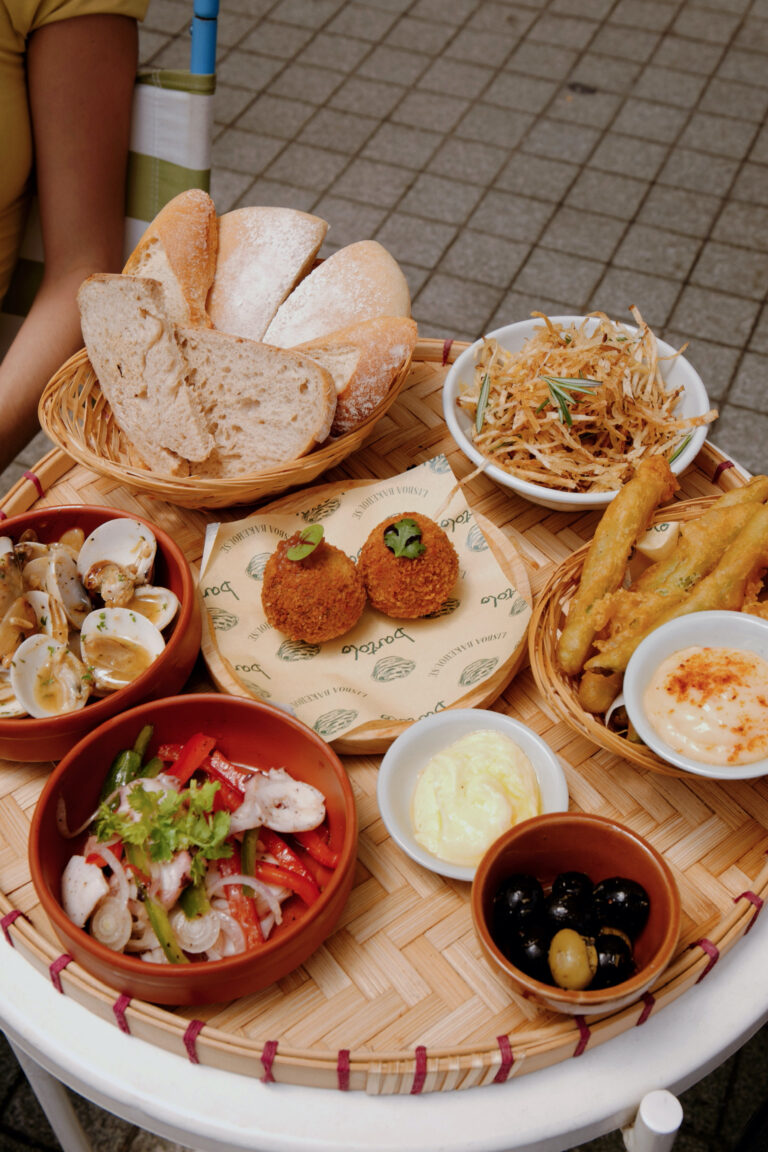
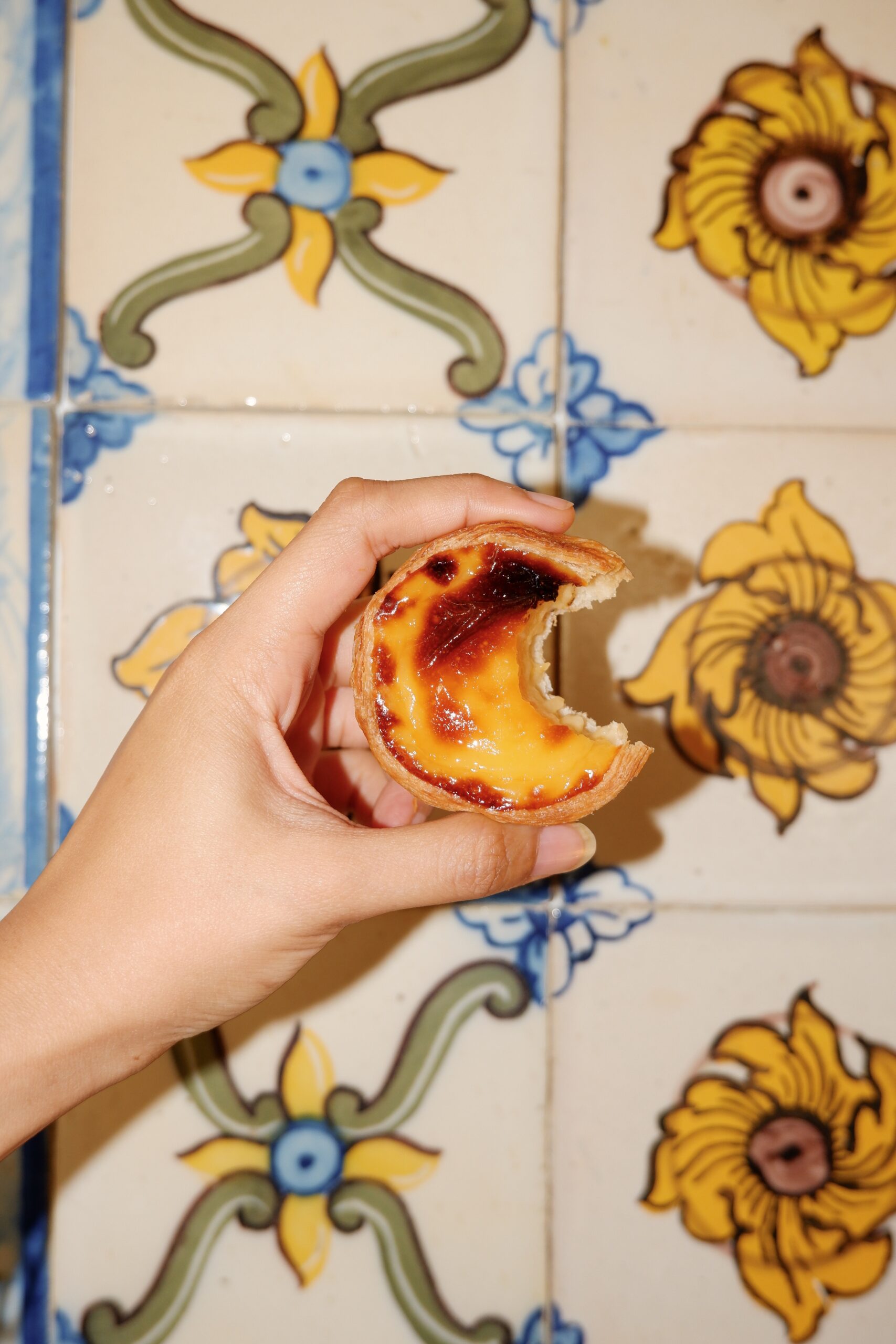
The mezzanine at Central Market smells of something specific on Thursday evenings — warm custard and scorched pastry drifting up through the old colonial air, underneath the sound of Julian Chan’s saxophone and the low hum of a crowd finding their tables. Most people come for the music. Then the pastéis de nata arrive, still warm from the oven, and suddenly the jazz is background.
In short:
- Bartolo Lisboa Bakehouse bakes pastéis de nata fresh every day at Central Market, using dough that is cold-proofed for 8 hours before it goes anywhere near an oven.
- Each nata costs RM 6 and is available at the Central Market flagship and the Nata House kiosk at Bangsar Shopping Centre.
- The recipe follows Lisbon tradition: laminated pastry, scorched custard, no shortcuts — the same tart you would eat standing at a counter in Belém.
What makes a genuine pastel de nata different from an ordinary egg tart?
A genuine pastel de nata uses laminated, shatter-crisp pastry and a scorched custard made from egg yolk, sugar, cream and cinnamon — a recipe with roots in the Jerónimos Monastery in Belém, Lisbon, dating to the early 19th century. The Hong Kong egg tart — which is what most Malaysians grew up eating — uses shortcrust or flaky pastry and a smoother, paler custard that aims for silkiness rather than char. Neither is inferior; they are simply different things, made with different intentions.
| Feature | Pastel de nata | Hong Kong egg tart |
|---|---|---|
| Pastry type | Laminated (similar to croissant dough) | Shortcrust or flaky |
| Custard texture | Soft, slightly trembling, scorched on top | Smooth, pale, fully set |
| Serving temperature | Warm, ideally minutes from the oven | Room temperature |
| Flavour notes | Caramel, cinnamon, slight char | Vanilla, sweet, clean |
| Origin | Belém, Lisbon, early 1800s | Guangdong, via British influence |
| Typical size | Small — around 8 cm across | Medium — around 10 cm |
The Lisbon original — still made at Pastéis de Belém on Rua de Belém since 1837 — uses a cinnamon-dusted custard with a deliberately scorched surface, verging on burnt in places. That char is not a mistake. It is the point. The bitterness of the top against the sweetness of the custard underneath is where the whole thing lives.
Why does freshness matter so much with pastel de nata?
The laminated pastry in a pastel de nata begins losing its structure within hours of baking — by the following morning, what was shattering and crisp has softened into something much closer to cardboard.
The custard compounds the problem. A fresh nata has a centre that trembles — not raw, not gelled, but something in between that the Portuguese call cremoso. Leave it overnight and the custard firms up and turns rubbery at the edges. Reheat it in a microwave and you get something even less pleasant: a sweated pastry case and a bubbling custard that has broken its own texture.
This is why we cold-proof our dough for 8 hours before baking. It slows the lamination process, builds flavour in the pastry layers, and produces a base that shatters the way it should — in flakes, not crumbs. It also means we cannot rush the process. There is no shortcut that produces the same result, which is why both our Central Market kitchen and the Nata House at Bangsar Shopping Centre receive fresh batches every day rather than working from a central production line baked somewhere else.
If you have ever bitten into a pastel de nata in Kuala Lumpur and wondered why it did not taste like the ones in Lisbon, the answer is almost always one of two things: the pastry is shortcrust rather than laminated, or it was baked yesterday.
Where else can you find pastel de nata in Kuala Lumpur?
Pastel de nata has become far easier to find in KL over the past decade, but the gap between an authentic, freshly baked version and a mass-produced lookalike sold at room temperature in a plastic box remains wide.
A number of café chains now carry something labelled a Portuguese egg tart. Most are made in central kitchens, transported cold, and either reheated poorly or not reheated at all. The pastry tends to be shortcrust — quicker to make, cheaper to produce, and structurally nothing like laminated dough. The custard is sweet in a commercial way that has little to do with the Bairro Alto.
There are also a handful of independent bakeries in Petaling Jaya and Mont Kiara producing creditable versions. Some are genuinely good. If you are in those neighbourhoods and cannot make it to Central Market or BSC, you could do worse. But context matters. A pastel de nata eaten in a strip-mall bakery under fluorescent light is a snack. The same tart eaten at a candlelit table on the mezzanine of a heritage market, while a quartet plays below you and someone at the next table orders a glass of wine, is something the bakery version cannot replicate. The tart does not change. The room around it does.
Where Bartolo fits in
At Bartolo Lisboa Bakehouse, the pastéis de nata are RM 6 each. They are available at the Central Market flagship on the mezzanine level — the one with the jazz — and at our Nata House kiosk at Bangsar Shopping Centre for those on the south side of the city. Both locations bake fresh every day from cold-proofed, laminated dough, following the Lisbon method as closely as a tasca in the Bairro Alto would. The custard is scorched. The pastry shatters. We serve them warm.
The Central Market location is the full picture. Thursday evenings bring Jazz Jam — free entry, live music from Julian Chan on sax, Melvin Goh on piano, Wli Cheah on keys, and Amar Azalan on bass, plus a full menu of Lisbon cooking: petiscos, bacalhau, wine by the glass. The pastéis de nata are not an add-on to the atmosphere; they are what makes the place honest. A tasca without real food is just a bar. The nata is part of what makes Bartolo the real thing rather than a themed room.
For the full menu and what is on this week, see our menu and upcoming events. For table bookings or larger orders, message us on WhatsApp.
Frequently asked questions
Where can I buy fresh pastel de nata in Kuala Lumpur today? Bartolo Lisboa Bakehouse bakes pastéis de nata fresh daily at two KL locations: the mezzanine level of Central Market in the city centre, and the Nata House kiosk at Bangsar Shopping Centre. Each nata is RM 6. Both locations receive fresh batches every morning — there is no day-old stock.
What is the difference between a pastel de nata and a Portuguese egg tart? They are the same thing. “Pastel de nata” is the Portuguese name; “Portuguese egg tart” is the English translation used across Malaysia and Singapore. The confusion arises because some cafés sell a lookalike made with shortcrust pastry and a fully set, pale custard — a genuine pastel de nata uses laminated pastry and a cremoso, scorched custard. If the top is not blistered and the pastry does not shatter when you bite it, it is not the real article.
Can I order Bartolo’s pastéis de nata for takeaway or catering? Yes. Both Central Market and Bangsar Shopping Centre offer takeaway. For large orders, events or catering enquiries, visit the catering page or contact us directly on WhatsApp — we can discuss quantities and lead times there.
What time does Bartolo open at Central Market, and do I need to book? For current opening hours and directions to both locations, the visit us page has everything you need. The Thursday Jazz Jam at Central Market runs in the evening with free entry — no booking required for walk-ins, but if you want a table guaranteed on a busy night, a message on WhatsApp beforehand goes a long way.
Related reading: Where to Find the Best Pastel de Nata in Malaysia (2026 Guide)