
It is almost midnight at the Central Market mezzanine. Julian Chan is mid-phrase on alto sax, the crowd has found its second wind, and somewhere between the music and the candlelight someone places a glass of dark, inky Douro red on the table. You look at it. You think: I have been drinking the wrong thing all year.
In short:
- Portuguese wine is built on over 250 indigenous grape varieties found nowhere else on earth, giving it a character that French, Spanish, and Italian wine simply cannot replicate.
- The key styles range from bone-dry, lightly sparkling Vinho Verde to the brooding reds of the Douro and the sun-baked richness of Alentejo.
- Portuguese wine is genuinely underrepresented in Kuala Lumpur, which makes knowing what to order — and where — a worthwhile skill.
What makes Portuguese wine different from other European wine?
Portuguese wine is built almost entirely on indigenous grape varieties found nowhere else — over 250 cultivars, compared to the 20 or so widely planted grapes that dominate France — giving it a flavour profile that tastes like no other country on earth.
Spain has its Tempranillo. France has Cabernet Sauvignon and Chardonnay, grapes that have colonised vineyards from California to South Australia. Portugal, by contrast, kept its own: Touriga Nacional, Trincadeira, Tinto Cão, Alvarinho, Arinto, Loureiro, Baga. These are not obscure technicalities. They translate directly into wines with a distinctive tannic structure, high natural acidity, and a particular dark-fruit character — blackberry, dried fig, black olive — that you will not find in a Rioja or a Burgundy.
The country’s Atlantic coastline matters too. Portugal is narrow but climatically extreme — cool and rainy in the north, searingly hot in the south — and that range produces everything from the delicate effervescence of a Vinho Verde to the concentrated intensity of a late-harvest Douro red. According to Wines of Portugal, the country registers more native grape varieties per square kilometre than any other wine-producing nation.
| Feature | Portuguese Wine | Spanish Wine | French Wine |
|---|---|---|---|
| Key red grapes | Touriga Nacional, Trincadeira | Tempranillo, Garnacha | Cabernet Sauvignon, Pinot Noir |
| Key white grapes | Alvarinho, Arinto, Loureiro | Albariño, Verdejo | Chardonnay, Sauvignon Blanc |
| Typical red character | Dark fruit, firm tannins, high acidity | Earthy, vanilla-oak, medium body | Varies widely by region |
| Signature style | Port (fortified), Vinho Verde (light fizz) | Sherry (fortified), Cava (sparkling) | Champagne (sparkling), Cognac (spirit) |
| Price in KL | Moderate to premium | Moderate | Moderate to very premium |
Which Portuguese wine regions should you know?
The five regions most worth understanding are Vinho Verde, Douro, Dão, Alentejo, and Lisboa — each producing wines that taste nothing like one another, from the same small country.
Vinho Verde — literally “green wine,” though the name refers to youth rather than colour — comes from the cool, wet northwest. It is typically light, low in alcohol (often 8–11%), slightly sparkling from residual carbon dioxide, and intensely refreshing. The best single-varietal examples, made from Alvarinho grapes in Monção and Melgaço near the Spanish border, have real complexity and the structure to age.
The Douro Valley is where Port comes from, but the region also produces some of Portugal’s most serious dry reds — structured, age-worthy wines from Touriga Nacional, Touriga Franca, and Tinto Cão blended on steep schist terraces above the river. They need food or time. Usually both.
Alentejo, the vast, hot cork-oak plateau south of Lisbon, gives you the opposite: generous, ripe, approachable reds that are easy to love on first sip. If you are new to Portuguese wine, this is where to start.
Dão, in the granite highlands of central Portugal, produces elegant, restrained reds that wine professionals tend to admire most — earthy, fine-grained, closer in spirit to a good Burgundy than anything else the country makes.
Lisboa — the wine region surrounding the capital — is where younger producers are doing the most interesting work: natural wines, old-vine revivals, urban-cool labels designed for the Bairro Alto crowd.
What food pairs best with Portuguese wine?
Portuguese wine was designed around Portuguese food — salt cod, cured meats, strong cheeses, olive oil — and those pairings hold because both the food and the wine share the same high-acid, mineral backbone.
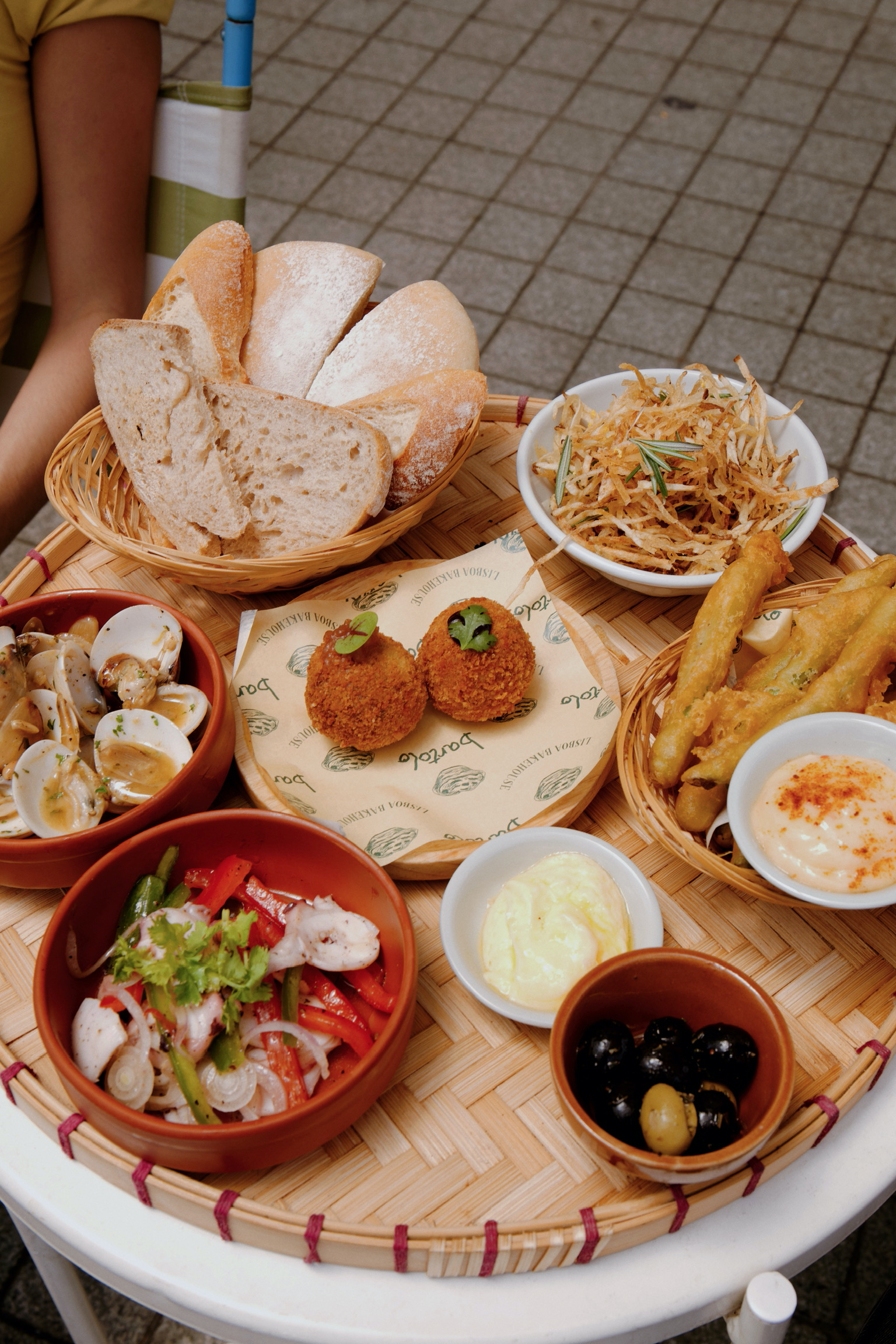
A glass of Vinho Verde alongside petiscos — the small Portuguese bar plates that function like Spanish tapas — is one of the most logical food-and-wine combinations in European cooking. The wine’s acidity cuts through salt and fat; the slight effervescence refreshes between bites.
Douro reds need something with weight: slow-roasted lamb, braised bacalhau (salt cod baked with cream and potato), aged sheep’s-milk cheese. The tannins require protein to soften.
Alentejo reds are the crowd-pleasers. They work with grilled chicken, pork dishes, even a serious burger — but they sing alongside pork belly with clams, the Alentejano combination that appears on every honest Lisbon menu.
And then there is Port. Tawny Port alongside a custard tart — a pastel de nata, blistered and trembling — is the oldest dessert pairing in Portuguese cuisine. Sweet but not cloying, the wine mirrors the caramelised edges of the pastry without overwhelming the egg custard at the centre.
Where can you find Portuguese wine in Malaysia?
Portuguese wine is available in Kuala Lumpur through specialist wine merchants, select supermarkets with serious imported wine sections, and a handful of restaurants that have made a deliberate effort to stock a Portuguese list.
It is less common than French or Spanish wine, and Malaysia’s import duties on alcohol mean a decent bottle typically starts around RM 60 at retail and climbs steeply for anything with a pedigree. That makes the by-the-glass option — at a bar or restaurant that has already opened the bottle — the most practical way to explore.
Wine shops in TTDI, Bangsar, and Mont Kiara are your best bets for retail. Ask specifically for Alentejo reds as an entry point; they are the most widely imported. For Vinho Verde, look for single-varietal Alvarinho from the Monção or Melgaço subregions if you want to understand what the style can genuinely do.
The honest reality is that Portuguese wine remains overlooked in this city. Most wine lists in KL lean heavily French or New World. Finding a place that treats the Portuguese canon seriously — and serves it alongside actual Portuguese food — still requires some knowing.
Where Bartolo fits in
We are on the mezzanine of Central Market, above the old trading floor, in a space that was built for exactly this kind of night: live music running late, petiscos arriving when you need them, and a glass of something Portuguese that tastes like the city it came from.
Our food is rooted in Lisbon cooking — bacalhau, chouriço, the pastéis de nata we sell at RM 6 each, made with dough that cold-proofs for eight hours — and we believe what you drink should match that honesty. Wine at Bartolo is chosen to pair with the kitchen, not to fill a list.
On Thursday nights, the Jazz Jam brings Julian Chan on sax, Melvin Goh on piano, Wli Cheah on keys, and Amar Azalan on bass. Entry is free. If you have been curious about Portuguese wine and want to try it in the right context — real food, live music, a crowd that came to be somewhere rather than just eat — this is the room for it.
Check the events calendar for Afterdark nights and salsa evenings, or browse the full menu before you arrive. Bookings and questions via WhatsApp.
Frequently asked questions
Is Portuguese wine expensive in Malaysia? Portuguese wine in Malaysia sits in the mid-to-premium price range because of the import duties applied to all alcohol. Expect to pay from RM 60 upward for a decent bottle at retail, and more at restaurants. Ordering by the glass at a specialist bar makes exploration more affordable — useful when you are still learning which regions suit your palate — without committing to a full bottle.
What is the difference between Vinho Verde and regular white wine? Vinho Verde is a specific Portuguese DOC (protected origin) from the northwest of Portugal — not a generic style of white wine. It is made primarily from Loureiro, Arinto, or Alvarinho grapes, typically low in alcohol (8–11%), and slightly sparkling from natural residual carbon dioxide. A white Burgundy or Marlborough Sauvignon Blanc will be fuller-bodied, higher in alcohol, and non-sparkling. The two styles share very little beyond being white wine.
Does Port wine go with food, or only dessert? Port is more versatile than its reputation suggests. Tawny Port pairs beautifully with custard-based desserts like pastéis de nata, hard aged cheeses, and salted nuts. White Port served chilled over ice is a classic Portuguese aperitif — drunk with olives and crisps in Lisbon tascas before dinner. Ruby Port is the one best reserved for dessert. None of it is strictly an after-dinner drink.
What is the easiest Portuguese wine to try first? An Alentejo red is the most approachable entry point: ripe, fruit-forward, and relatively forgiving in terms of tannins compared to a Douro or Dão red. Look for bottles made with Aragonez (the Alentejo name for Tempranillo) or Trincadeira. If you prefer white wine, start with a single-varietal Alvarinho Vinho Verde from the Monção or Melgaço subregions — aromatic, fresh, and immediately pleasurable without any background knowledge required.
Related reading: What is Bacalhau? Portugal’s Salt-Cod Tradition Explained