Portuguese cuisine is one of the great underrated food cultures of Europe. It is what happens when a country with one of the longest coastlines in the continent, a strong agricultural tradition, and 500 years of trade with Africa, Brazil, and Asia all sit down to dinner together.
For most of Kuala Lumpur’s history, the only way to eat it was on a plane to Lisbon. That has changed in the last few years. Here are the seven dishes any first-time visitor to Portuguese food in KL should try, and what makes each one a small piece of the country.
1. Pastel de Nata — the egg tart that started everything
What it is: A small, flaky pastry shell filled with rich egg-yolk custard, baked at high heat until the top blisters and caramelises. Eaten warm, dusted with cinnamon and powdered sugar.
Why it matters: The recipe goes back to the early 1800s, originally made by monks at the Jerónimos Monastery in Lisbon. There is no Portuguese cuisine without it.
Where to try it in KL: Bartolo Lisboa Bakehouse bakes them fresh every morning at both Central Market and BSC. The classic is the one to start with — chocolate, matcha, and berry variations are also worth a try.
Read our complete guide to pastel de nata →
2. Bacalhau — Portugal’s national fish
What it is: Salt-cured cod, traditionally air-dried for weeks, then rehydrated and cooked. The Portuguese say there is a different bacalhau recipe for every day of the year — 365 in total.
Why it matters: Bacalhau is so embedded in the culture that it has its own holiday rituals. Christmas Eve dinner in Portugal is consoada, and the centrepiece is bacalhau cozido — boiled salt cod with potatoes, cabbage, eggs, and olive oil.
Where to try it in KL: At Bartolo, the menu has several bacalhau dishes:
- Bacalhau à brás — shredded codfish stir-fried with onion, matchstick fries, eggs, parsley, and black olives. The everyday family version.
- Spiritual codfish — baked codfish with carrots in a creamy sauce. Slower, richer, more festive.
- Codfish burger in squid-ink bolo do caco — modern, but recognisably Portuguese.
3. Cataplana — the seafood stew with its own copper pot
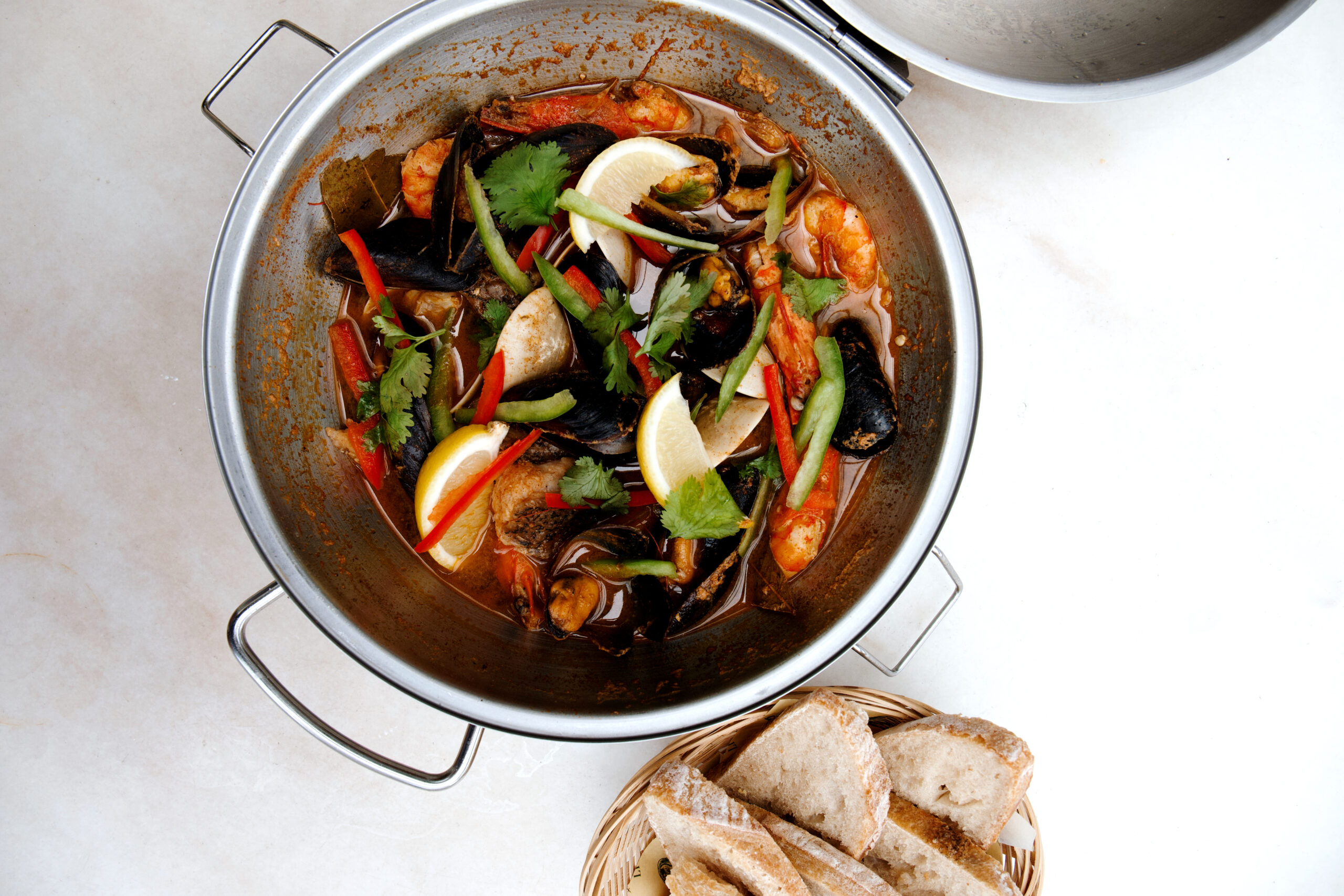
What it is: A clam-shaped copper pot filled with mussels, clams, tiger prawns, and white fish, sealed shut, and steamed over high heat. The lid comes off at the table — the steam carries garlic, white wine, and the unmistakable scent of the Atlantic.
Why it matters: The cataplana pot itself is centuries old, originally Moorish, adapted for Portuguese seafood. The technique seals in every drop of flavour.
Where to try it in KL: At Bartolo’s Central Market location, the cataplana sea stew is on the Specials menu — available for 2 or 4 people. Order an hour ahead if you want it as the centrepiece of a celebration meal.
4. Bitoque — the steak that defines a tasca
What it is: A 200g ribeye, pan-seared, served on a hot plate with a fried egg on top, french fries, white rice, and a sauce made of butter, garlic, and white wine that the Portuguese call simply molho de bitoque.
Why it matters: This is what Portugal eats for lunch. Every tasca makes their own version. Often served with a glass of house red, a salad, and bread.
Where to try it in KL: Bartolo’s bitoque uses the family’s secret bitoque sauce. Order it for lunch or dinner — it is one of the most-loved dishes on the menu.
5. Francesinha — the sandwich engineered for the cold
What it is: A multi-layered sandwich from Porto, made with bread, ham, cured turkey ham, ribeye steak, chicken sausage, and pepperoni — all stacked, covered with melted cheese, and drowned in a tomato-and-beer sauce. Served with chips on the side.
Why it matters: Invented in the 1950s in Porto by an emigrant returning from France (hence “little French girl”), it is now Porto’s most famous dish.
Where to try it in KL: Bartolo serves the Francesinha on the Specials menu. It is a serious dish — best shared, or eaten as a complete meal in itself.
6. Bolo do Caco — the Madeiran flatbread
What it is: A round, soft flatbread originally from Madeira, made with sweet potato and wheat flour, traditionally cooked on a hot stone. Served with garlic-and-parsley herbed butter.
Why it matters: It is the bread Portuguese people eat when they want to be transported home. The texture is unlike any other bread — yielding, slightly sweet, comforting.
Where to try it in KL: At Bartolo, bolo do caco with herbed butter is one of the simplest and most-loved items on the menu. Also used as the bun for several sandwich items including the codfish burger and tuna steak.
7. Petiscos — the Portuguese way to eat together
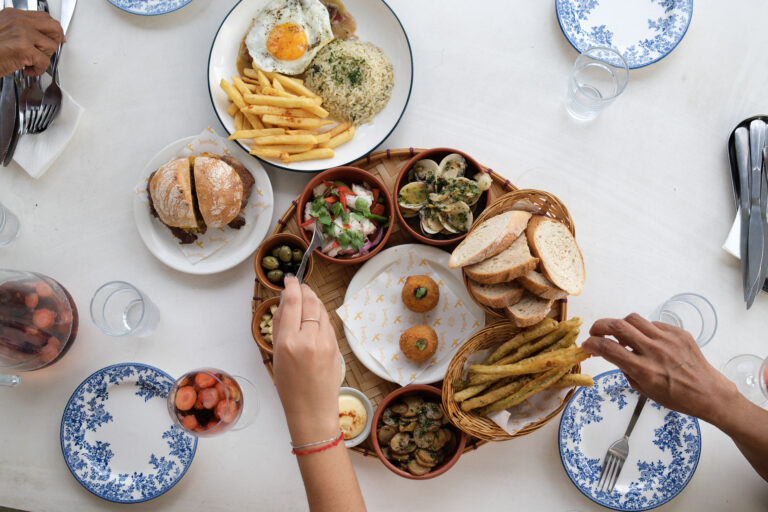
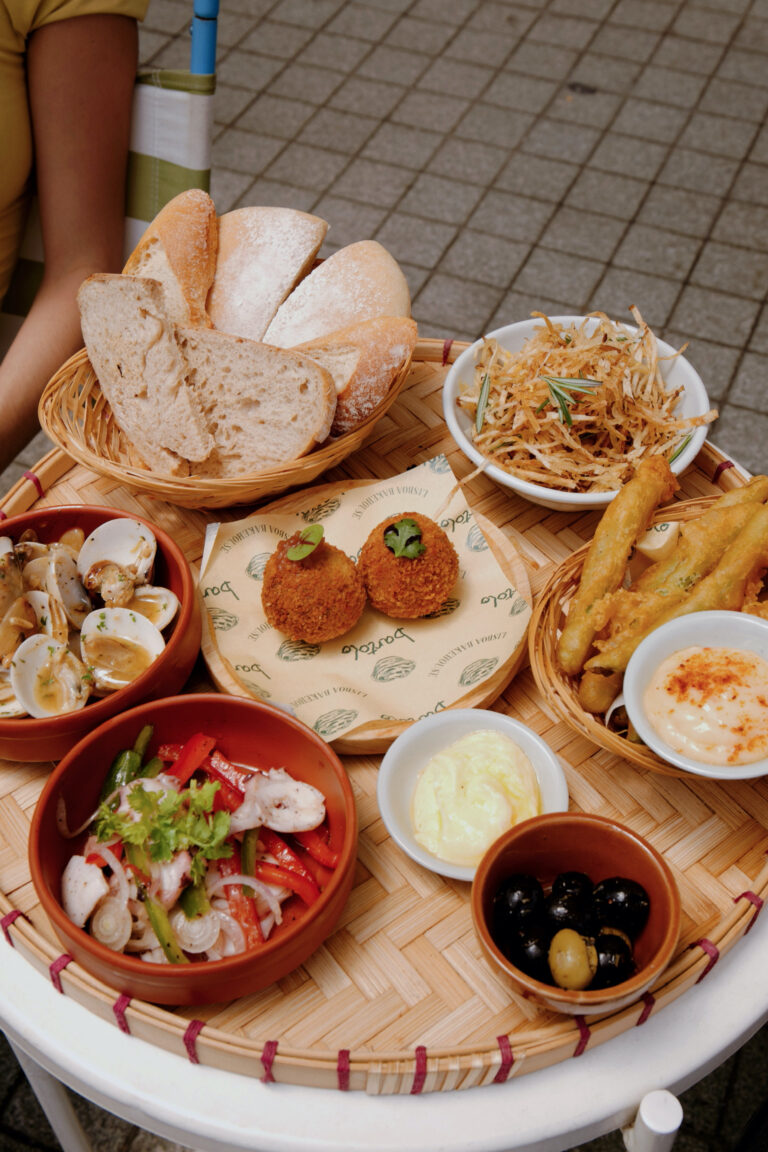
What it is: Not a single dish but a way of eating. A spread of small plates — cured meats, cheeses, marinated olives, fried croquettes, grilled sardines, octopus salad — meant to be ordered in batches and shared around the table.
Why it matters: This is how Portugal actually eats. A tábua de petiscos (literally “petiscos board”) is the centrepiece of a Portuguese meal. It is closer to mezze than to tapas, and far more generous than either.
Where to try it in KL: Bartolo’s Tábua Petiscos is built for groups — bread, octopus salad, clams, croquettes, butter, marinated olives, peixinhos da horta (tempura green beans), matchstick lemon-rosemary fries, all on one board. The right way to start a meal with friends.
How to eat your way through Portuguese food in one meal
If you have one dinner to spend on Portuguese food in KL, here is how to do it properly:
- Start with a bread basket, dips, and a tábua de petiscos for the table
- Drink vinho verde or a Portuguese white from the Dão region
- Mains: order one cataplana for the table, plus one bitoque each
- Dessert: pastel de nata with espresso, no exceptions
If you are eating alone, simplify: bolo do caco with butter to start, the bitoque for the main, pastel de nata to close. Allow 90 minutes, minimum.
Frequently asked questions
Is Portuguese food spicy? Generally no. The Portuguese use piri-piri (a small chili) for some dishes, but the cuisine is built around herbs (parsley, coriander, bay), garlic, and olive oil rather than heat.
Is Portuguese food healthy? By Mediterranean diet standards, yes — heavy on seafood, olive oil, vegetables, and unprocessed grains. Less butter and cream than French cooking. Portion sizes are honest, not gigantic.
Is Portuguese food halal-friendly? Many dishes are halal-friendly (seafood, vegetable-forward dishes, the bread course). Pork features in several dishes (bifana, some petiscos). Bartolo can accommodate halal preferences for groups — ask when booking.
What is the difference between Portuguese food and Spanish food? They share roots but have evolved differently. Portuguese food is more Atlantic-facing (heavy seafood, salt cod, less rice), more African-influenced (piri-piri from Angola, palm oil), and has its own dessert tradition (egg-yolk-rich doces conventuais). Spanish food is more Mediterranean, more pork-forward, and lighter on bread.