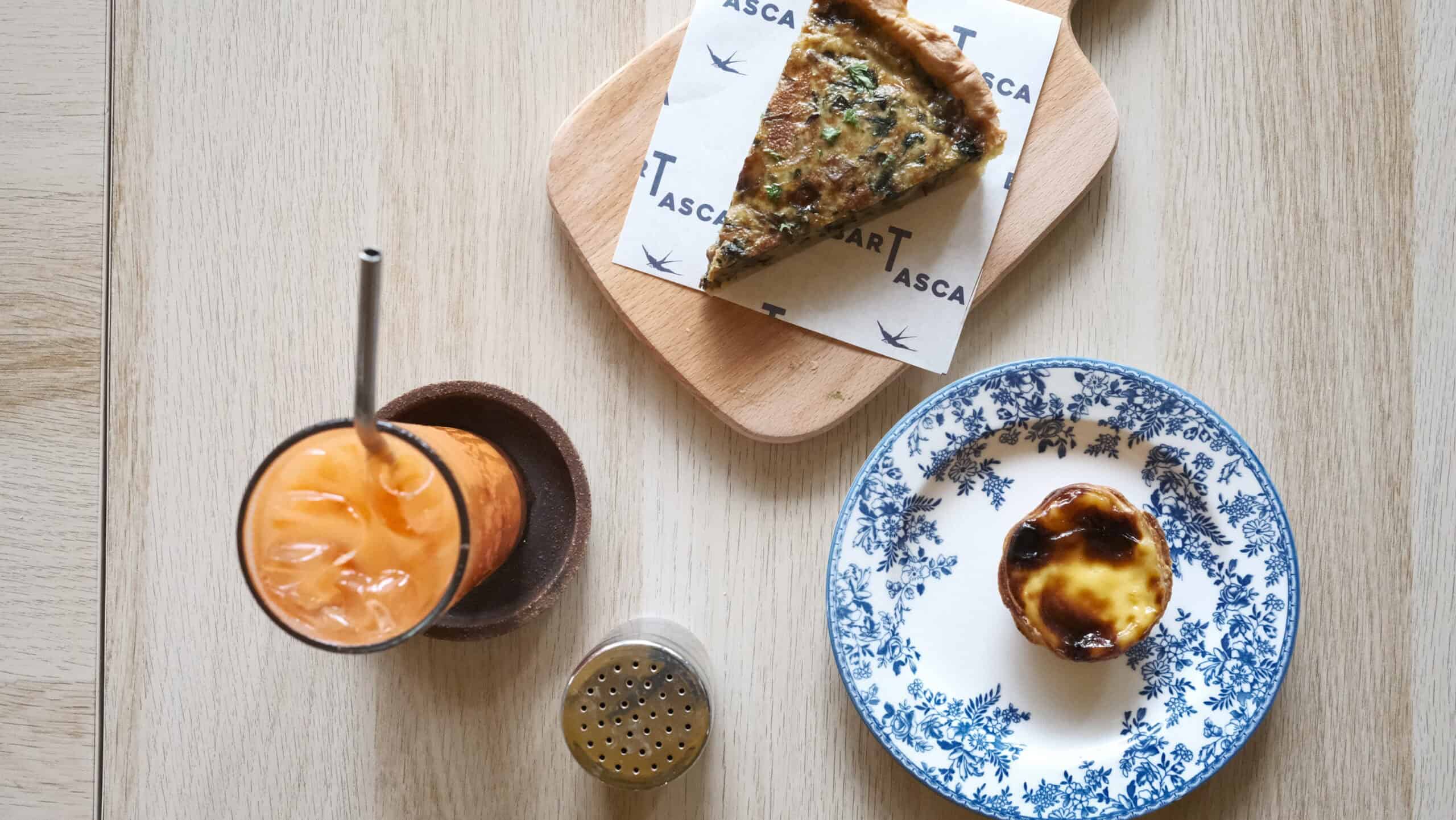
It is a small thing, this tart. The size of a coin pressed flat. Crisp, blistered, golden brown on top — and inside, a custard so rich it almost trembles when you bite in. The Portuguese have been making pastel de nata for nearly four centuries, and in every café from Lisbon to Porto you will find people eating one with a strong espresso, almost as a ritual.
If you live in Kuala Lumpur and you have not yet tried a properly made pastel de nata, this guide is for you.
What exactly is a pastel de nata?
A pastel de nata (plural: pastéis de nata) is a Portuguese egg-custard tart made with a flaky, multi-layered puff pastry shell and an egg-yolk-rich custard filling that is baked at very high heat. The intense heat caramelises the surface — those characteristic dark spots are not burns, they are the sign of a properly made nata.
The word pastel simply means pastry. Nata means cream. Together, “cream pastry” — but the name does not begin to describe the texture.
A great pastel de nata has three things working together:
- A pastry shell that shatters when you bite it — never soggy, never doughy
- A custard that is set but still soft — somewhere between a flan and a curd
- Caramelisation on top — the result of a very hot oven, not a kitchen torch
Where the recipe came from
The story begins in the early 1800s at the Mosteiro dos Jerónimos, a monastery in the Belém district of Lisbon. The monks needed egg whites to starch their habits and clarify wine. The leftover yolks went into pastries — and over time the nuns and monks of Portugal turned this surplus into an entire genre of sweets called doces conventuais (conventual sweets).
When the monastery closed in 1834, the recipe passed to a nearby sugar refinery, and from there to a bakery that still operates today: Pastéis de Belém. Their version uses the original recipe, kept secret to this day. Every other pastel de nata in Portugal is, technically, a respectful imitation.
Pastel de nata vs pastel de Belém — what is the difference?
This is one of the most-Googled questions about Portuguese pastry, and the answer is simple:
- Pastel de Belém is the trademarked name used only by the bakery in Belém, Lisbon. Their recipe is a closely guarded secret.
- Pastel de nata is the generic name for the same dessert made anywhere else.
In flavour and form, they are essentially the same dish. Some people say the Belém version has a slightly thicker crust and a less sweet custard. Most people, blindfolded, cannot reliably tell the difference.
How to eat one properly
There are conventions in Portugal that elevate a pastel de nata from “snack” to “small ritual”:
- Serve it warm — straight out of the oven if possible. Cold natas are a sad imitation.
- Dust with cinnamon and powdered sugar at the table. Each cafe in Portugal puts shakers on every table.
- Drink it with espresso — the strong, slightly bitter coffee balances the sweetness perfectly. A bica in Lisbon, a cimbalino in Porto.
- Eat it standing at the counter, ideally. This is the Portuguese way.
Where to find authentic pastel de nata in Kuala Lumpur
For most of the last decade, pastel de nata in KL meant a frozen import or a pale supermarket version. That has changed.
Bartolo Lisboa Bakehouse at Central Market bakes pastel de nata fresh every morning to an authentic Lisbon recipe — flaky shell, just-set custard, blistered tops. The same recipe is used at the Bangsar location (BSC).
What sets it apart locally:
- Baked from raw daily, not warmed from frozen
- Original Lisbon recipe passed down through the family
- Choice of flavours: classic, chocolate, matcha, mixed berries, strawberry — all using the same custard base, with the additions worked in respectfully (no flavour for the sake of novelty)
- Wholesale and frozen-to-home options for events and home freezers
You can view the full pastel de nata range on the menu or order in bulk via WhatsApp.
Variations worth trying
Beyond the classic, Portuguese bakeries have started experimenting. The most successful variations preserve the original custard:
- Chocolate pastel de nata — dark cocoa swirled into the custard, finished with a dusting of cocoa powder
- Matcha pastel de nata — earthy and slightly bitter, balances the sweetness
- Mixed berries — fresh berries baked into the top
- Frozen for home — par-baked, then finished in your own oven (15 min at 240°C)
Frequently asked questions
What does pastel de nata taste like? Rich egg custard, lightly sweet, with a flaky, slightly salted pastry shell. The caramelised top adds a faint bitterness that balances the sweetness — like a high-end crème brûlée in pastry form.
Is pastel de nata gluten-free? No. The pastry uses wheat flour. Gluten-free versions exist but are rare and the texture is different.
Can I freeze pastel de nata? Yes — best eaten within a month. Reheat in a hot oven (220°C) for 5 minutes to restore the crisp shell. Microwave makes the pastry soggy.
What is the best time of day to eat one? Mid-morning in Portugal — with espresso. In KL, anytime — but warm from the oven is always best.
How is pastel de nata pronounced? Pa-SHTEL de NA-tah (Portuguese pronunciation). The plural pastéis de nata is pa-SHTAY-iss de NA-tah.