If you ask a Lisbon native where they eat dinner, the answer is rarely a restaurant. It is a tasca. Pronounced TASH-ka, the word describes something Portugal has built its entire eating culture around — a small, family-run eatery where the wine is house wine, the menu changes with the weather, and the host is also the cook.
There is no English equivalent. “Bistro” is too French. “Tavern” implies more drinking than eating. “Hole-in-the-wall” gets the size right but misses the warmth. So we say tasca and let the word do its own work.
The origins of the tasca
The word tasca is thought to come from the Latin tasca, meaning a measure or portion — likely referring to the small portions of food and wine served in these places. They emerged in working-class neighbourhoods of Lisbon and Porto in the 19th century, originally as places where labourers could buy a glass of wine and a plate of grilled sardines for almost nothing on the way home from work.
Over time, the tasca became something more cultural than economic. It is where families eat on Sundays. Where neighbours meet. Where the food does not change because there is no reason to change it — the bacalhau à brás has been right since the 1950s, and the moelas (chicken gizzards in tomato stew) was perfected by someone’s grandmother who is no longer here to ask.
What separates a tasca from a restaurant
| Restaurant | Tasca |
|---|---|
| Trained chef | The owner cooks |
| Printed menu | A blackboard, often updated daily |
| Reservations expected | Walk in, sit down |
| Tablecloths | Bare tables, sometimes paper |
| Wine list | House red and house white |
| Tasting menu | Maybe seven dishes total, all great |
| Quiet, refined | Loud, conversational |
A tasca is not “casual fine dining.” It is something earlier than that distinction — closer to eating in someone’s living room than in a commercial space. The pleasure is in the lack of pretense.
What you eat at a tasca
The menu of a true tasca is small and hyper-traditional. You will see most of these:
- Bacalhau à brás — salt cod shredded with eggs, matchstick fries, parsley, black olives. Portugal’s most-cooked dish.
- Moelas — chicken gizzards stewed in tomato, sopped up with bread.
- Caldo verde — a green soup of potato, kale, and slices of chouriço sausage.
- Polvo à lagareiro — slow-roasted octopus with garlic, olive oil, and smashed potatoes.
- Sardinhas assadas — grilled sardines, eaten whole, with bread.
- Bifana — a thin pork sandwich on a soft bread roll, with mustard.
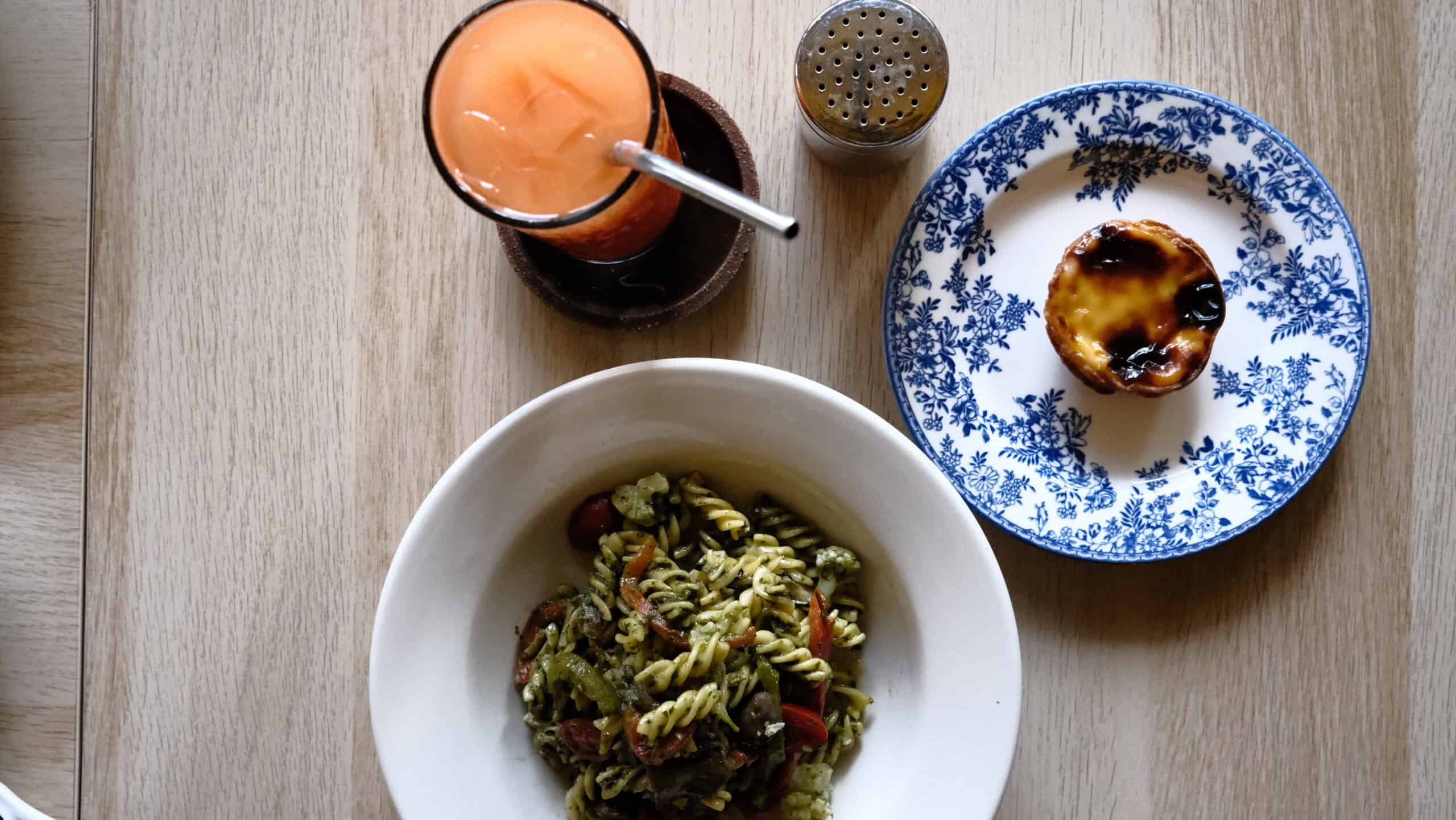
- Pastéis de nata — for dessert, of course. Always with espresso.
The drinks list is just as short: house red, house white, vinho verde (a young, lightly fizzy white from the north), beer, espresso, and Portuguese aguardente or port if it is late.
The tasca tradition in Kuala Lumpur
For a long time, KL did not have a true Portuguese tasca. There were Portuguese-Eurasian restaurants in Melaka, but those reflect a 500-year-old cultural blend — different food, different mood, equally beautiful. What was missing was the Lisbon-style tasca: small, family-run, recipe-driven, with proper petiscos and a counter you could lean on with an espresso.
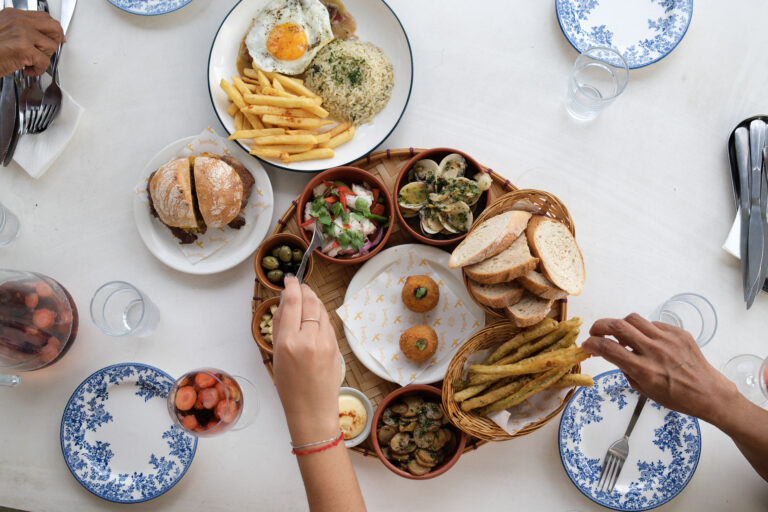
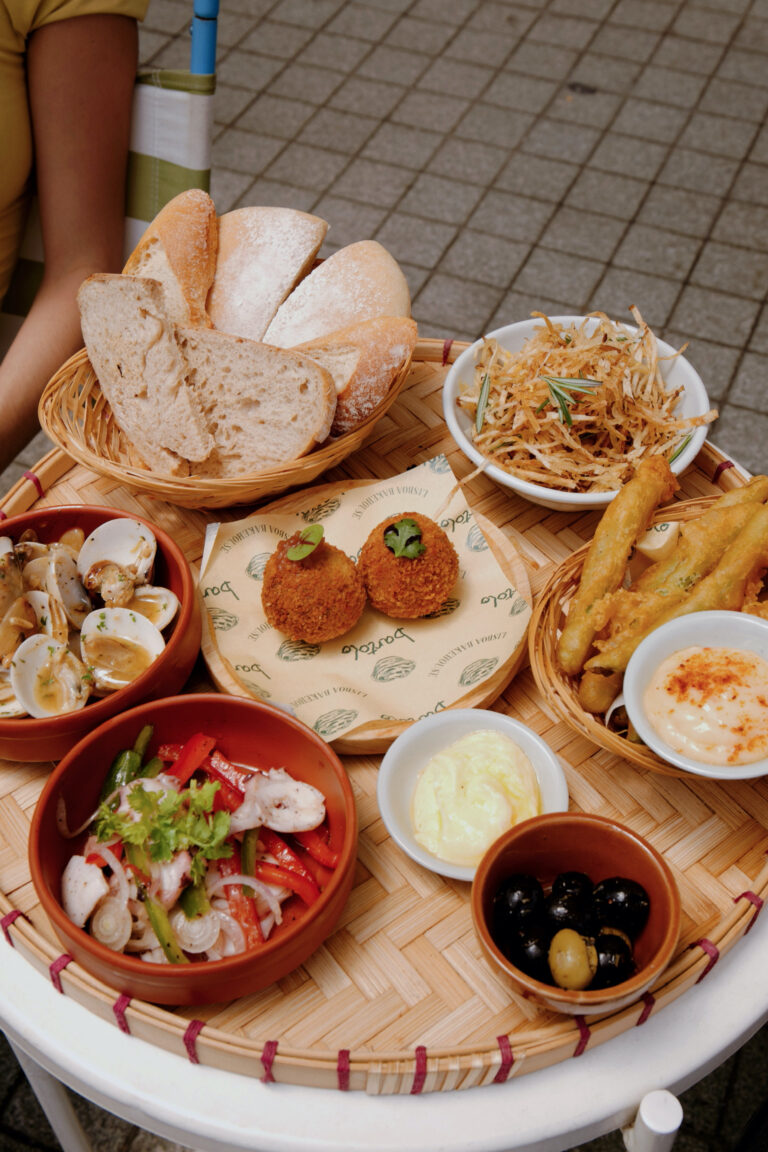
Bartolo Lisboa Bakehouse at Central Market was built with that gap in mind. The team set out not to recreate fine Portuguese dining, but to recreate the everyday Portuguese eating culture — the rhythm of a meal that opens with breads and dips, moves through petiscos, and lingers over coffee and a pastel de nata.
You can see it in the small details: the heavy ceramic plates. The azulejo tile work on the walls. The choice to serve moelas & grapes at all (a very tasca dish, almost never on Western menus). The tábua de petiscos sharing board for groups. The way the menu lists vinho verde before any other wine.
The full menu is here — but it reads better in person, with someone walking you through what is fresh that day.
How to eat at a tasca, the Portuguese way
Two unspoken rules:
- Order more than you can finish. Tasca eating is built around sharing. Three or four small dishes between two people, then a main, then dessert. Leftover food is normal, not failure.
- Don’t rush the meal. The Portuguese have a word for the time after a meal when no one wants to leave the table — sobremesa. It literally means “over the table.” A tasca expects this. Order another coffee. Stay for the pastel de nata. The bill will come when you ask for it.
If you visit Bartolo, do this: order the Tábua Petiscos (the sharing board), pour a glass of vinho verde, eat slowly, and stay for an espresso and a pastel de nata. You have done it right.
Frequently asked questions
How do you pronounce tasca? TASH-ka. The “s” sounds like “sh” in standard European Portuguese.
Is a tasca the same as Spanish tapas? No, but they are cousins. Spanish tapas are small individual plates served with drinks, often in bar-hopping style. Portuguese petiscos are similar small plates, but a tasca is a kind of restaurant — a setting — rather than a way of eating.
Are tascas only in Portugal? Traditionally yes — but the tradition has spread to a few cities with strong Portuguese diasporas (London, Toronto, Boston) and, more recently, to KL.
Do tascas take reservations? In Portugal, rarely. Just walk in. In KL at Bartolo, walk-ins are welcome and reservations help during weekend dinner.
What should I order on a first visit? Bread with dips, the croqueteria selection (small fried bites), one petisco like moelas or gambas à guilho, one main like bacalhau à brás, and finish with pastel de nata and espresso.