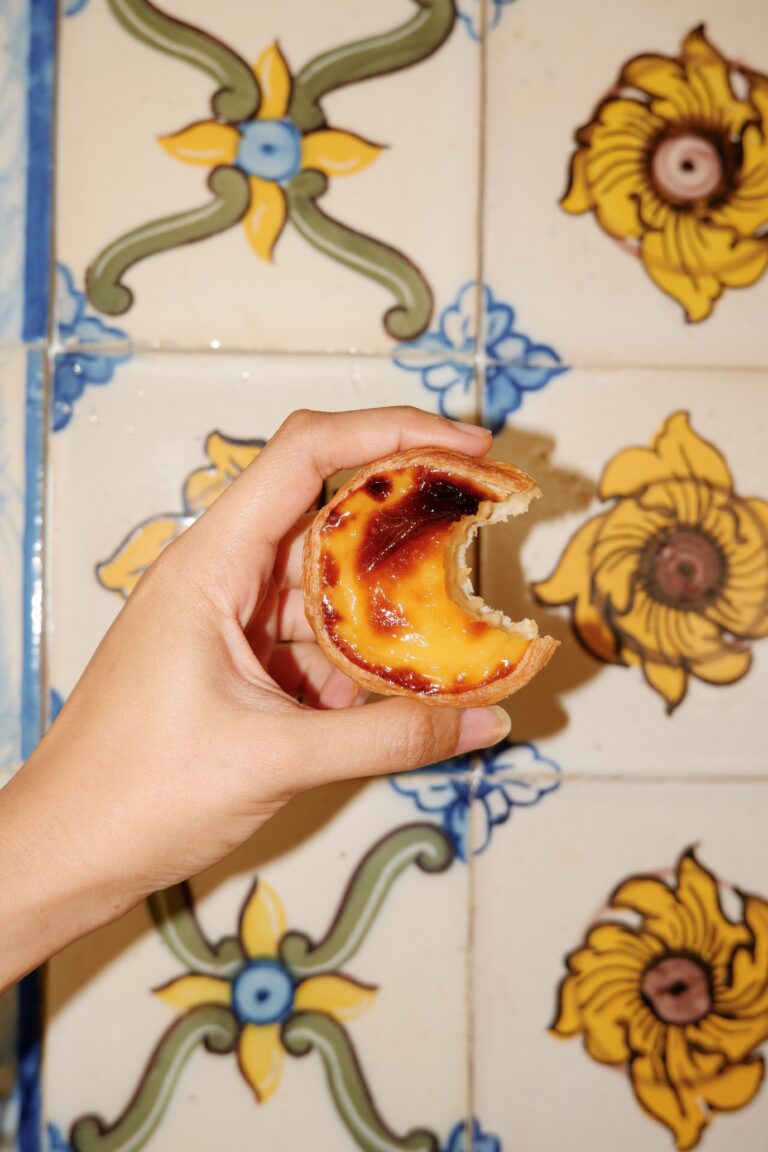
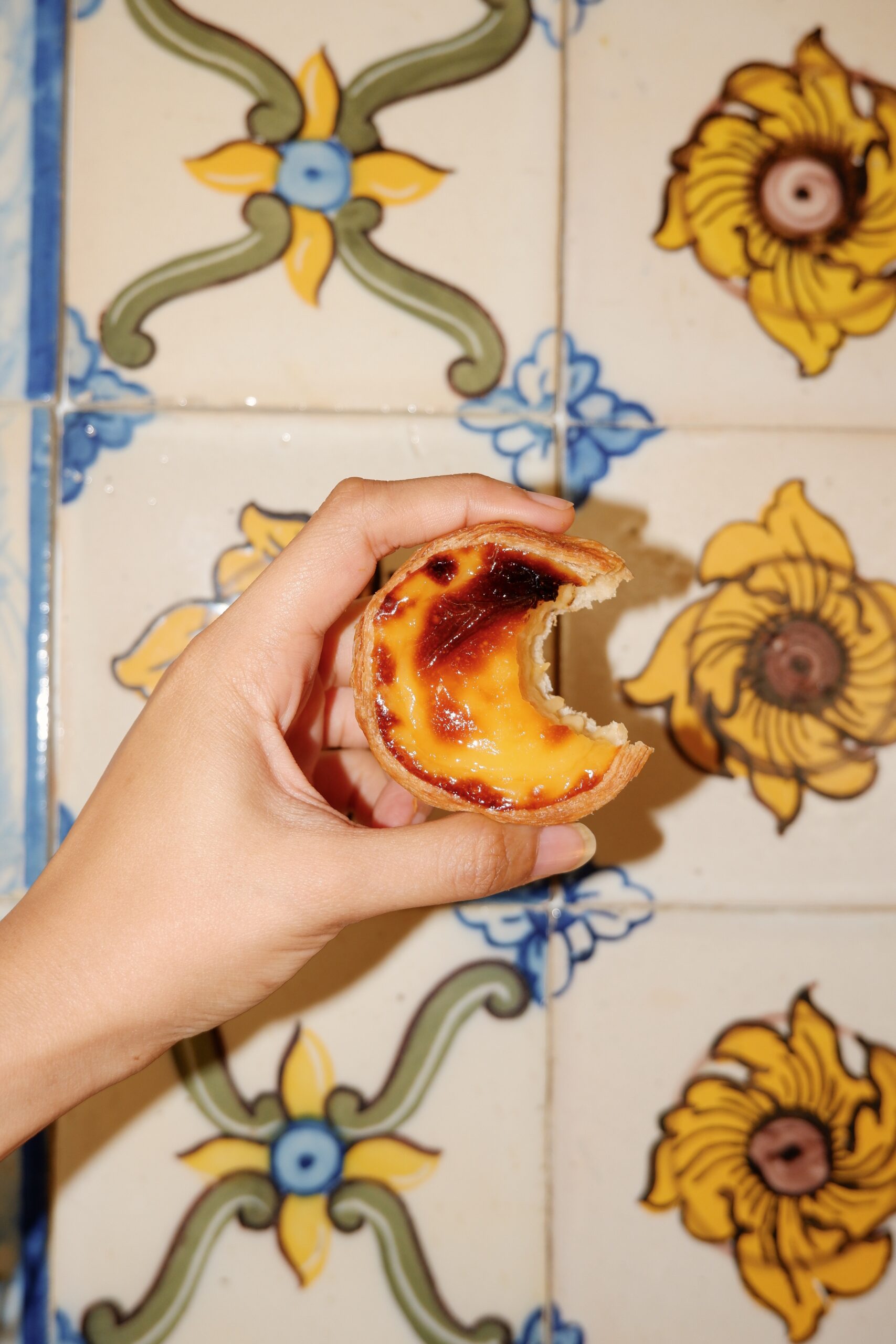
It is a small thing, this tart — the size of a coin pressed flat, with a top so blistered it looks scorched, and a custard underneath that trembles when you press it with a fork. In Kuala Lumpur, you can now find these in a dozen places. But a good pastel de nata and a great one are separated by details most cafés skip. This guide is about those details.
In short:
- The best pastel de nata in Malaysia is judged on three things: a shatter-crisp laminated shell, a custard that wobbles rather than sets firm, and blistered caramelisation on top from a properly hot oven.
- Bartolo Lisboa Bakehouse sells its pastéis at RM 6 each, baked from pastry that is cold-proofed for 8 hours, at Central Market and the Nata House kiosk in Bangsar Shopping Centre.
- Reheating a nata for 90 seconds at 200°C restores the crackle that even the best examples lose within a couple of hours of baking.
What makes the best pastel de nata in Malaysia?
The best pastel de nata is defined by a crisp, many-layered pastry shell, a soft custard that still trembles in the centre, and a blistered, near-burnt top — not by sweetness or size. Most tarts sold in KL fail on the first count. Laminated pastry — butter folded into dough again and again — needs a screaming-hot oven, upwards of 250°C, to puff into the brittle layers that crackle when you bite. Cut that corner and you get something closer to a cupcake liner: pale, soft, forgettable.
The custard is the second test. A real nata sets only at the edges; the middle should still move, rich with egg yolk and just enough sugar to carry the flavour rather than drown it. The third test is the top. Those dark, almost-black freckles are not a mistake. They come from the natural sugars caramelising under fierce heat, and they give the tart its faint bitterness — the thing that stops it being merely sweet. Get all three right and you understand why the Portuguese eat these standing up, with an espresso, every morning of their lives.
Where can you find the best pastel de nata in Kuala Lumpur?
The best pastel de nata in Kuala Lumpur is found at a small number of dedicated bakehouses that laminate their own pastry daily — including Bartolo Lisboa Bakehouse at Central Market — rather than at general cafés that buy frozen shells. The KL scene has grown quickly. A handful of specialist names, Bartolo and Aroma De Nata among them, have pushed the standard up, while many cafés now keep a tray by the till as an afterthought. The difference shows the moment you bite in.
Use this table to judge any nata in front of you, wherever you buy it:
| Marker | A great pastel de nata | An average one |
|---|---|---|
| Pastry | Crisp, shatters, many visible layers | Soft, pale, single dense wall |
| Custard | Trembles in the centre, deep yellow | Firm set, jelly-like or rubbery |
| Top | Dark blistered spots, faint bitterness | Flat, uniformly golden, sugary |
| Aroma | Toasted butter, vanilla, citrus zest | Mostly sugar, little depth |
| Freshness | Baked that day, eaten within hours | Sat in a chiller, gone limp |
A practical note: a great nata does not survive long in a humid climate. KL’s air softens laminated pastry fast. If a tart has been sitting under a glass dome since the morning, even a brilliant one will have lost its crackle by afternoon. Buy where they bake in batches through the day, and eat soon.
Is the pastel de nata in Malaysia the same as the original in Lisbon?
Malaysian pastel de nata follows the same recipe as the Lisbon original, but the famous Pastéis de Belém version remains distinct because its exact formula has been kept secret since 1837. The tart was created by Catholic monks at the Jerónimos Monastery in the Belém district of Lisbon, who sold them to survive after the religious orders were shut down. The recipe passed to a nearby sugar refinery and became the Pastéis de Belém shop, which still guards the original method behind a closed kitchen door.
Everywhere else in Portugal — and now in Kuala Lumpur — the tart is called pastel de nata rather than pastel de Belém, and the recipe is openly made. The bones are identical: laminated pastry, an egg-yolk custard scented with lemon and sometimes a cinnamon stick steeped in the milk, baked hot and fast. What changes is the hand that makes it. A good baker in KL working with the same technique can match Lisbon closely. What you cannot fake is the lamination and the oven heat, which is exactly where the cheaper local versions fall down. Authenticity here is not about geography. It is about method.
Where Bartolo fits in
Bartolo Lisboa Bakehouse bakes its pastéis from pastry cold-proofed for 8 hours and sells them at RM 6 each, fresh through the day, at Central Market and at Nata House in Bangsar Shopping Centre. We laminate in-house and bake hot, because the crackle and the blistered top are the whole point — there is no shortcut to them. The slow cold-proof is what gives the shell its layers and the custard its time to develop flavour rather than just sugar.
At the Central Market flagship you can sit down with a bica — a short, strong Lisbon espresso — and eat one the way the Portuguese do, standing or seated, unhurried. We are also a tasca in the evenings, with petiscos to share and a music programme: free-entry Thursday Jazz Jam with Julian Chan on sax, Melvin Goh on piano, Wli Cheah on keys and Amar Azalan on bass, plus salsa nights, poetry slams and ticketed Afterdark gigs (RM 50 early, RM 60 at the door). The Nata House kiosk at BSC is built for the quick stop: a box of natas and a coffee to take away. See the full pastel de nata range on our menu, or message us on WhatsApp to set aside a fresh batch.
Frequently asked questions
How much does a pastel de nata cost in Malaysia? A pastel de nata in Malaysia typically costs between RM 5 and RM 8 at a dedicated bakehouse. At Bartolo Lisboa Bakehouse the price is RM 6 each, with box deals for half-dozens and dozens. Prices at general cafés vary more widely and often reflect frozen, mass-produced shells rather than pastry laminated on site, so the cheapest tart is rarely the best one.
What is the best way to reheat a pastel de nata? The best way to reheat a pastel de nata is 90 seconds in an oven or air fryer at 200°C, never a microwave. The hot dry heat re-crisps the laminated pastry and re-blisters the top, returning most of the texture lost while the tart sat cooling. A microwave does the opposite — it steams the shell soft and turns a great nata limp. Let it cool for a minute before eating, as the custard holds heat.
Is pastel de nata Portuguese or Chinese? Pastel de nata is Portuguese, created in Lisbon’s Belém district before 1837. The Chinese egg tart, common in Hong Kong and Macau, descends from it — Portuguese traders and the colony of Macau carried the custard tart east. The two are now distinct: the Portuguese version has a flaky laminated shell and a caramelised top, while the Cantonese egg tart uses a smoother, paler, shortcrust-style pastry and an uncaramelised custard.
Can you order pastel de nata in bulk for events in KL? Yes — Bartolo bakes pastéis in bulk for offices, weddings and parties across Kuala Lumpur, with notice. Because the pastry is cold-proofed for 8 hours, large orders need a day or two ahead so every tart is baked fresh rather than pulled from a chiller. Message us on WhatsApp at +60 11-2145 9985 with your headcount and date, and we will sort quantities, boxing and pickup or delivery from Central Market or BSC.
Related reading: Pastel de Nata vs Hong Kong Egg Tart: What’s the Difference?