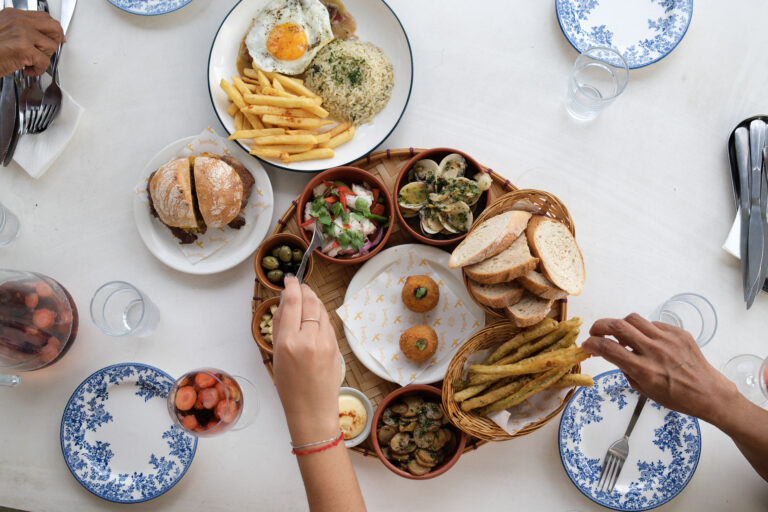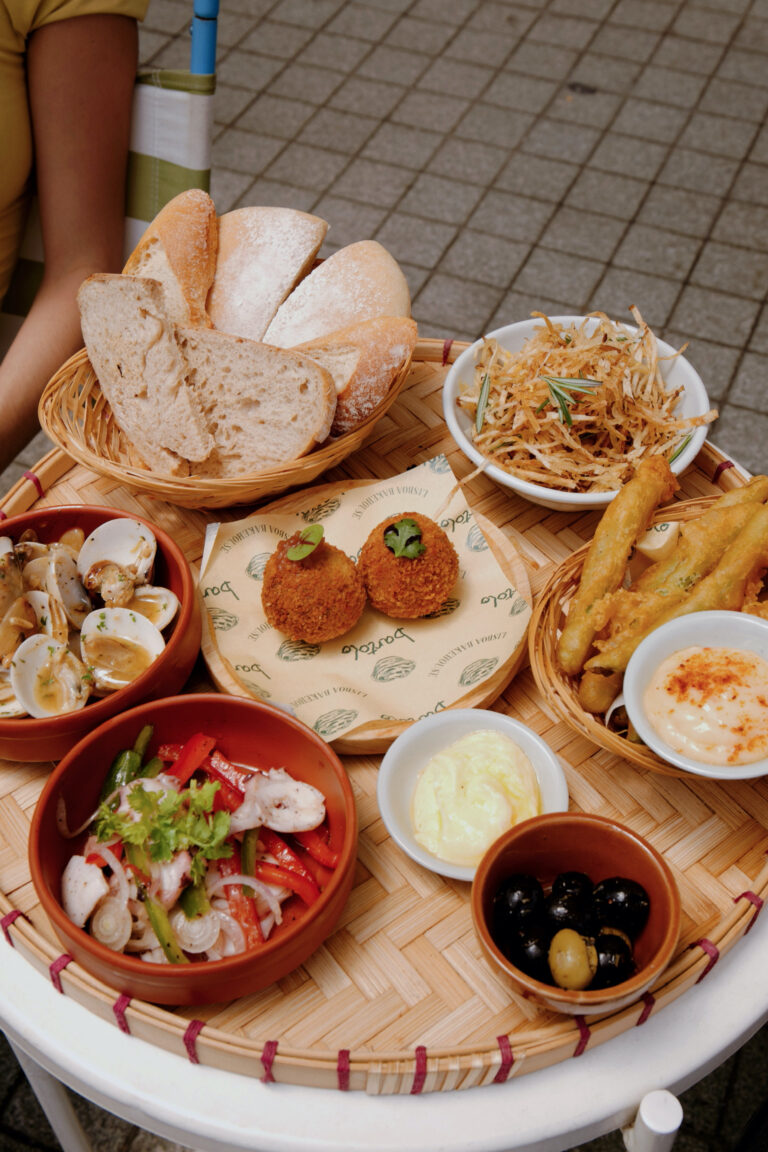

To eat the Portuguese way is to surrender your watch at the door. A meal isn’t a transaction; it is a slow, generous opening of plates — one after another — until the table is a small landscape of breads, olives, cured meats, and conversation. We call this style of eating petiscos, and it sits at the heart of what we do at Bartolo.
Petiscos are Portugal’s answer to tapas, but with their own quieter, richer character. A wedge of queijo da serra, sliced almonds, a sliver of presunto. Codfish fritters straight from the fryer. A bowl of moelas — chicken gizzards stewed in tomato — that you scoop up with bread without ever putting your fork down.
The tasca tradition
The Portuguese word tasca describes the kind of place where this culture thrives. A tasca is small, unfussy, family-run. The wine is house wine; the menu changes with the weather; the host is also the cook. There is no pretense and there is no rush. People come to be fed, but also to be among each other.
We built Bartolo with that spirit in mind. The tile work, the warm lighting, the heavy ceramic plates — these are not just decoration; they are an invitation to behave a certain way. Order more than you think you can finish. Stay longer than you planned. Order another coffee. Let the conversation outlast the food.
The Portuguese have a word for that lingering after a meal: sobremesa. It literally means “over the table” — that stretch of conversation when the dishes are cleared but no one wants to leave. We hope you find some of yours here.