A Cool, Authentic Night Out in KL: Beyond Bukit Bintang and the Clubs
Looking for cool places for a night out in Kuala Lumpur? Live jazz, salsa nights and honest Lisbon food at Central Market
Read Article →
Discover the culture, cuisine, and inspiration behind every dish — stories about traditions, ingredients, and the people who bring the spirit of Portugal to life.
10 min read
Looking for cool places for a night out in Kuala Lumpur? Live jazz, salsa nights and honest Lisbon food at Central Market
Read Article →
There is a version of a night out in Kuala Lumpur that you have probably lived through more than once. It starts somewhere in Bukit Bintang. There is a queue. Inside, the music is loud enough to make conversation impossible and the drinks cost as much as a meal. By midnight you are tired — not because anything happened, but because nothing did.
In short:
The most interesting nights out in Kuala Lumpur happen in rooms that do not advertise themselves — heritage spaces, arts buildings, and upper-floor venues that the rooftop-bar crowd has not bothered to find. Bukit Bintang has its place. On the right night, the energy on Jalan Alor alone is worth the trip, and the views from the towers are genuinely spectacular. But a spectacular view and a crowded bar are not the same thing as a good night out. They share a surface resemblance and that is about it.
The problem with the obvious circuit — rooftop cocktails, Changkat after midnight, the clubs off Jalan P. Ramlee — is not that these places are bad. It is that they are interchangeable. The same DJ sets, the same drink specials, the same crowd checking their phones. You could drop that room into Bangkok or Jakarta and nothing about it would need to change.
What KL actually has, if you look past the first page of results, is something more interesting: a live-music scene that has been quietly building for years, heritage buildings that survived the city’s appetite for redevelopment, and pockets of culture that have not yet been packaged for mass consumption. The city’s real personality lives in those places. Getting to them requires only a small detour from the obvious.
A night out in KL that stays with you tends to involve three things the clubs rarely offer: music you can hear yourself through, food that means something, and a room where strangers end up in conversation. This sounds simple. It turns out to be rarer than it should be.
The live-music question matters more than people admit. There is a real difference between a venue that has music and a venue built around music. At a venue built around music, the set list matters, the musicians are introduced, and the room is arranged so that the piano carries as clearly as the bass. These rooms exist in KL — you just need to look past the hotel-lobby jazz and the endless covers circuit to find them.
Food is the other variable. KL’s food culture is extraordinary by almost any measure, but late-night eating around the entertainment strips tends to mean hawker food grabbed between bars or overpriced hotel snacks. A place that takes its kitchen as seriously as its programme — where the bread came out of a proper oven, where the salt cod was soaked for the right number of hours — is a different thing entirely. It earns its place in a night rather than just filling a gap.
The crowd follows from both. Good music and food that requires care attract people who came for the thing itself, not the opportunity to document it. These are the rooms where you end up staying two hours later than you intended.
When KL locals want a night that does not feel recycled, they tend to gravitate towards the city’s heritage and arts corridors — Central Market, the Zhongshan Buildings cluster in Chow Kit, and the quieter end of Bangsar — where venues have built their identity around culture rather than capacity. These areas share a quality that is harder to manufacture than a good sound system: they were made by people who live here, for people who live here.
Central Market is the clearest example of what KL gets right when it tries. The building has stood since the 1880s, originally a wet market, preserved rather than demolished when the area was redeveloped in the 1980s. The art deco bones remain. Inside, across three floors, you will find batik studios, craft vendors, and — on the mezzanine — a handful of venues that have made the heritage space their own.
The Zhongshan Buildings in Chow Kit offer a similar axis: independent galleries, a record shop or two, and a covered walkway that fills up on weekends with a crowd that is specifically there rather than drifting in from somewhere else. Bangsar’s quieter streets, away from the main strip, have that quality too — wine bars run by people who care about wine, restaurants that opened because someone actually wanted to cook.
What all these places have in common is that the atmosphere is not a design decision. It accumulated. That is the difference between a room with character and a room with a concept.
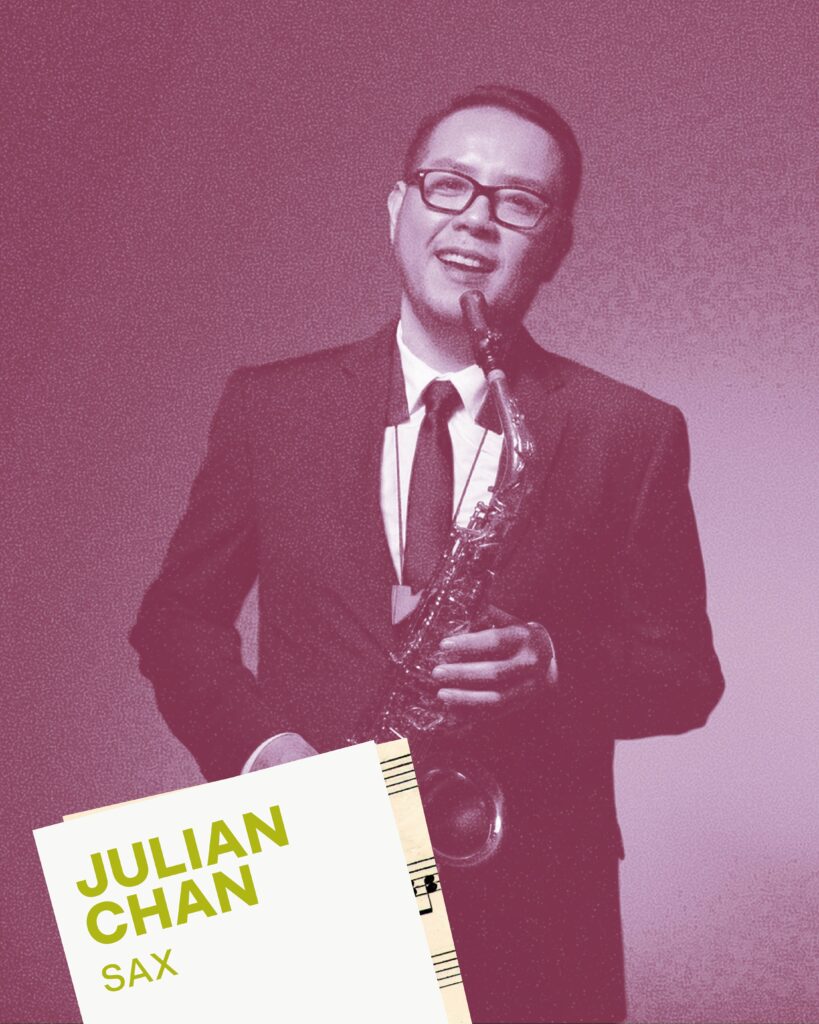
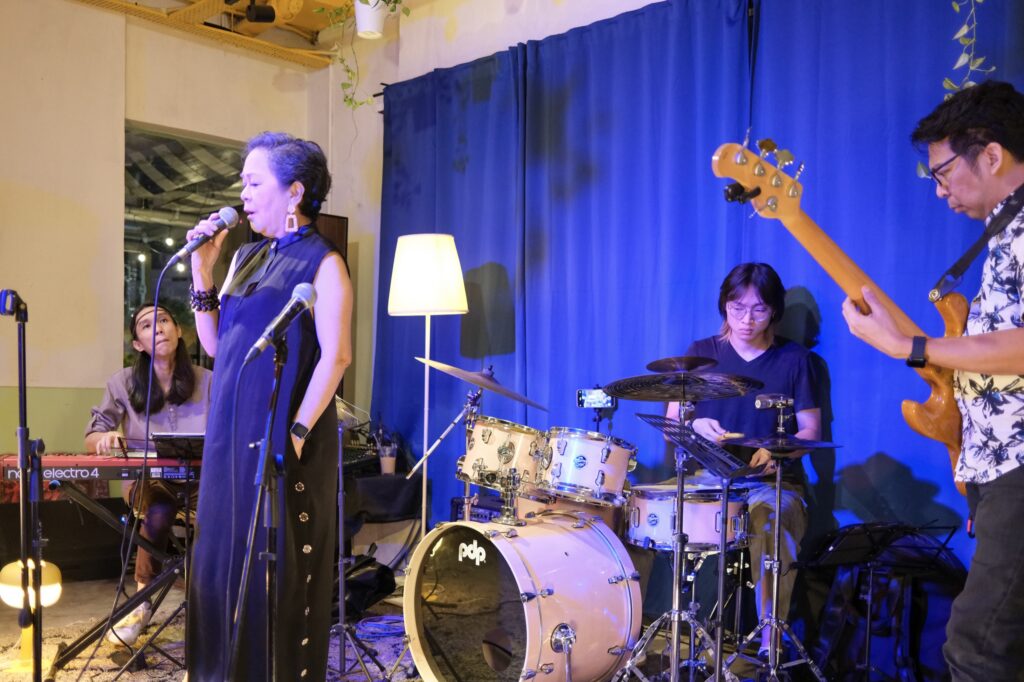
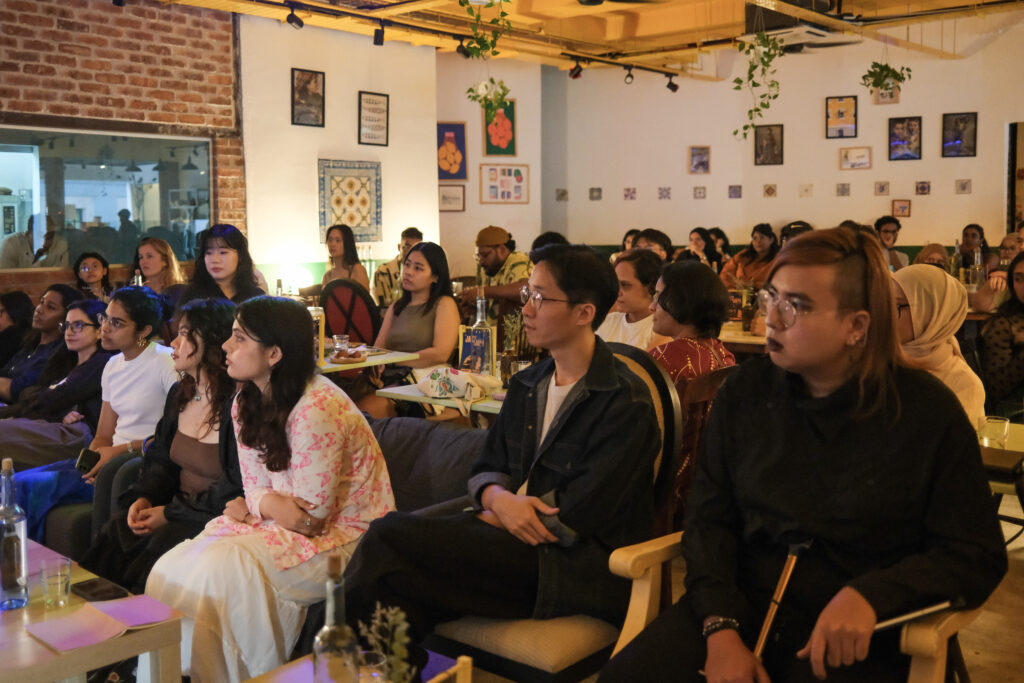
The mezzanine at Central Market feels like a room that has been there a long time, even if you are arriving for the first time. Candlelight, exposed brickwork, the sounds of the city below. On Thursday nights the Jazz Jam fills it with something the clubs on the other side of KL cannot quite replicate — Julian Chan on saxophone, Melvin Goh on piano, Wli Cheah on keys, and Amar Azalan on bass, playing to a room that showed up because it wanted to be there. Entry is free. The music runs as long as it should.
We also run salsa nights, poetry slams, and Afterdark gigs — ticketed from RM 50 in advance or RM 60 at the door. The full programme is on the events page.
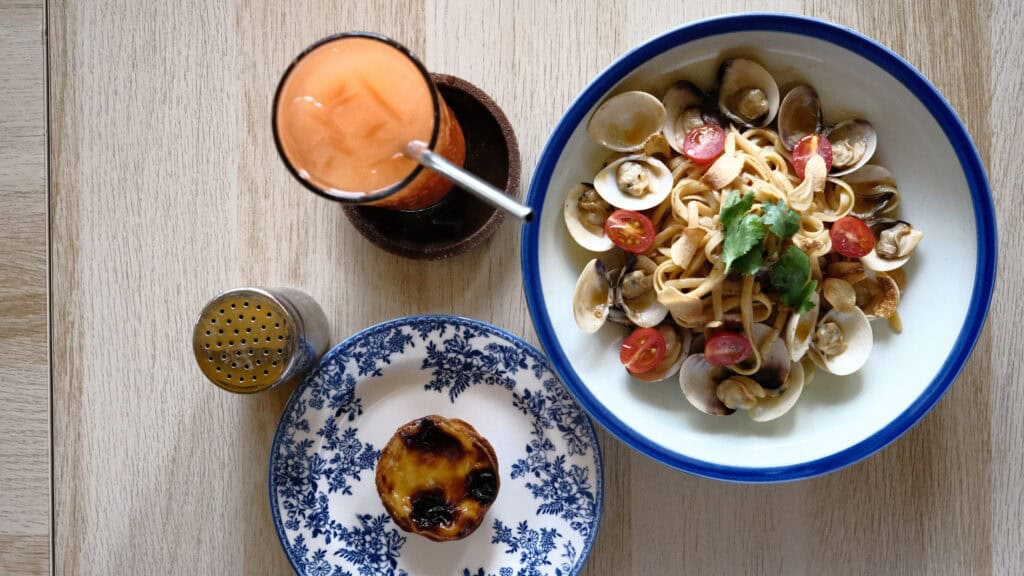
Underneath all of it, the food is Lisbon by conviction. The petiscos — small plates in the Portuguese tradition — are made from ingredients that belong on the plate. The pastéis de nata are cold-proofed for eight hours before they go into the oven, which is why the custard trembles and the pastry blisters the way it does at Pastéis de Belém in Lisbon. They cost RM 6 each. If Central Market is the wrong side of town, Nata House at Bangsar Shopping Centre carries them too.
For busy nights, message ahead on WhatsApp — the good seats fill early.
What are the coolest places to go for a night out in Kuala Lumpur that aren’t clubs? The most interesting nights out in KL for people who want something with more substance than a queue and a DJ tend to happen in heritage venues, live-music rooms, and arts-district spaces — Central Market’s mezzanine, the Zhongshan Buildings in Chow Kit, and the quieter end of Bangsar. Bartolo Lisboa Bakehouse at Central Market is one of the few places in the city that combines a proper live-music programme with serious Portuguese food in a heritage building, with free entry on Thursday jazz nights.
Is the Thursday Jazz Jam at Bartolo free to attend? Yes — the Thursday Jazz Jam at Bartolo Lisboa Bakehouse has free entry. The regular quartet is Julian Chan on saxophone, Melvin Goh on piano, Wli Cheah on keys, and Amar Azalan on bass. For Afterdark gigs on other nights, tickets are RM 50 in advance or RM 60 at the door. Current dates and lineups are listed on the events page. It is worth checking ahead, as the programme changes weekly.
Where exactly is Bartolo Lisboa Bakehouse in KL? The flagship Bartolo Lisboa Bakehouse is on the mezzanine floor of Central Market (Pasar Seni), on Jalan Hang Kasturi in central Kuala Lumpur — a short walk from Pasar Seni LRT station. This is the music and dining location where the jazz nights, salsa evenings, poetry slams, and Afterdark gigs take place. Nata House, the second Bartolo location, is a pastry kiosk at Bangsar Shopping Centre focused on the pastéis de nata.
What kind of food does Bartolo serve, and how late does the kitchen run? Bartolo’s menu is rooted in Lisbon cooking — petiscos (Portuguese small plates), bacalhau preparations, and the pastéis de nata the place is built around. The nata are cold-proofed for eight hours before baking, which produces the blistered pastry and trembling custard that separate them from anything out of a supermarket case. They cost RM 6 each. The full main menu is on the website. The kitchen runs alongside the music programme, so you can eat a proper meal while the band is playing.
Related reading: The Best Bohemian Bars and Hangouts in Kuala Lumpur
10 min read
Looking for a live music bar in Kuala Lumpur? Bartolo at Central Market hosts free Thursday Jazz Jams, salsa nights and Afterdark...
Read Article →
On a Thursday evening in Central Market, the saxophone reaches you before you find the stairs. You’re on the ground floor among the craft stalls and the last of the day’s shoppers, and then — up one flight, through a door — there is a room you weren’t expecting: candlelit tables, a four-piece band mid-set, and the particular hum of a crowd that came to listen. Finding a live music bar in Kuala Lumpur this honest, and this unhurried, is harder than it should be.
In short:
KL’s live music scene splits into three recognisable tiers: hotel lounges with professional but safe sets, high-volume clubs built for dancing, and a smaller cluster of independent rooms where something more authentic is happening.
The hotel lounges have been here longest — polished four-piece bands playing standards in the Westin, the Mandarin Oriental, and a handful of others. The music is competent. The audience tends to be there for the business dinner and the live band is a pleasant backdrop. Nothing wrong with it. But the music is decoration rather than the point.
The club circuit is the opposite problem. High SPL, DJs or bands playing to a crowd that came to dance rather than listen. Again, fine for what it is.
The interesting venues are the ones that fit neither category. Small rooms in shophouses, refurbished colonial buildings, heritage markets. These are the live music bars in Kuala Lumpur that people actually talk about the following morning — places where you go specifically because something is happening on stage and you want to be close enough to feel it. There are fewer than you’d think in a city this size, which is why finding a good one matters.
A great live music bar in Kuala Lumpur has three things: a room with real acoustics, musicians who chose to be there, and an audience that came to listen.
Acoustics matter more than most venues admit. A tiled room with hard walls turns a saxophone into a wall of reverb. A high-ceilinged space with wood and soft surfaces — a heritage building, a mezzanine with character — lets you hear the separation between instruments. The piano on its own, the bass holding the low end, the sax taking the tune somewhere unexpected. You notice the difference immediately when the room is working with the music rather than against it.
The musicians matter just as much. KL has real jazz talent — session players and bandleaders who move between the hotel circuit and independent venues — but not every room draws the best of them. The spaces that do tend to be ones where the room itself signals that music is taken seriously: attentive audience, good sound, a promoter who has thought carefully about the lineup.
The audience completes it. Live music in a bar is a social contract. When half the room is on their phones, the music loses something even if the band is excellent. The rooms that get this right attract a mix: regulars who know the players by name, first-timers drawn in by the atmosphere, people who landed there almost by accident and ended up staying two sets longer than planned.
A jazz jam is an open, informal session where musicians sit in on each other’s sets — loose, exploratory, and typically free; a ticketed gig is a curated performance with a fixed lineup and a more produced feel.
| Format | Entry | Atmosphere | Best for |
|---|---|---|---|
| Jazz jam | Free | Loose, social, unpredictable | Regulars, musicians, curious first-timers |
| Salsa night | Typically free | High energy, participatory | Dancing, late evenings, meeting people |
| Poetry slam / spoken word | Typically free | Quiet, charged, intimate | Something genuinely different on a weeknight |
| Afterdark ticketed gig | RM 50 early bird / RM 60 door | Curated, focused, higher production | Planned nights out and special occasions |
The jazz jam is the most misunderstood of these. Because entry is free and the lineup can shift mid-set, people sometimes assume it is a lesser version of a proper gig. It is not. At its best, a jazz jam is where you hear musicians push each other in ways a rehearsed set never quite allows — someone takes a solo in an unexpected direction, the pianist follows, the whole room pivots. That’s the thing you came for, and you can’t plan it.
Central Market is one of KL’s few remaining heritage buildings where the architecture itself creates atmosphere — and its mezzanine level is the most intimate live music space in the area.
Built in 1888 as a wet market and redesigned in the Art Deco style in 1937, Central Market has survived long enough to become one of those places the city couldn’t quite bring itself to demolish. The result is a building that feels genuinely layered — craft stalls below, a mezzanine above that catches the light differently depending on the hour, the whole thing carrying a weight of time that no purpose-built entertainment complex can replicate.
The mezzanine position matters acoustically. Elevated, away from the ground-floor noise, in a space that was never designed as a venue but turned out to be a natural one. The ceiling height, the old timber, the way sound pools and carries across the room — it works. When Julian Chan’s saxophone fills that space on a Thursday evening, something about the building makes it feel like this was always what it was for.
We are, first and foremost, a tasca — a Lisbon neighbourhood room that happens to occupy one of the best mezzanines in Central Market. The music nights are not add-ons to the food programme. They are why we built the space the way we did.
Our Thursday Jazz Jam is free entry and runs weekly. Julian Chan on sax, Melvin Goh on piano, Wli Cheah on keys and Amar Azalan on bass form the core of it, but the lineup shifts — that is the nature of a jam. Come early if you want a good seat. The room fills, and there is no reservation system for free nights.
Beyond jazz, we host salsa nights, poetry slams and Afterdark gigs — ticketed shows from RM 50 early bird or RM 60 at the door. See the full events calendar for what’s on.
Underneath all of it: honest Lisbon cooking. Petiscos — Portuguese small plates — bacalhau prepared the way it is in a Bairro Alto tasca, and pastéis de nata at RM 6 each, made with pastry that cold-proofs for eight hours before it goes near an oven. The custard trembles slightly when you’ve made it right. Ours does.
We are on the mezzanine level of Central Market, Kuala Lumpur. A second location — Nata House — operates at Bangsar Shopping Centre. Reservations and enquiries via WhatsApp. More on finding us and both locations.
What is the best live music bar in Kuala Lumpur for jazz? Bartolo Lisboa Bakehouse on Central Market’s mezzanine runs a free Thursday Jazz Jam every week, with core musicians Julian Chan on sax, Melvin Goh on piano, Wli Cheah on keys and Amar Azalan on bass. The heritage building’s acoustics and candlelit intimacy make it one of the few rooms in KL where the music is genuinely the point. Entry is free; no booking required, though arriving early is advised — the room does fill.
How much do live music nights in KL cost? Costs vary significantly by format. Hotel lounge sets are usually covered by the price of a drink. Independent venues range from free for open jazz jams to RM 50–RM 60 for curated shows. At Bartolo, the Thursday Jazz Jam is free entry; Afterdark ticketed gigs start at RM 50 early bird and rise to RM 60 at the door on the night.
Is Central Market worth visiting in the evening? Central Market is one of KL’s oldest surviving heritage buildings, originally constructed in 1888, and its mezzanine level has a character that newer venues rarely manage. A Thursday evening that combines a live jazz set at Bartolo, a few Portuguese small plates and a pastel de nata makes for a genuinely different night out — quieter and more specific than the Bukit Bintang strip, and better for it.
Do I need to book for Bartolo’s jazz nights? No booking is required for the Thursday Jazz Jam — entry is free and open to anyone. For Afterdark ticketed gigs, advance tickets at RM 50 are available through our events page; door price is RM 60. For groups of six or more, or if you’d like a table held for a specific night, get in touch via WhatsApp and we’ll sort something out.
10 min read
From live jazz at Central Market to Bangsar
Read Article →
KL has a habit of hiding its best rooms. The truly bohemian places — the ones where you stay three hours longer than planned — are rarely on the main strip. They are up a flight of stairs, through a courtyard, on the mezzanine of a century-old covered market where ceiling fans still turn and the smell of coffee drifts up through the floor. Finding them is half the point.
In short:
A genuinely bohemian bar in KL is one where the crowd, the culture, and the room have grown together over time — not one that has been designed to look that way.
The word gets stretched. In a marketing context, “bohemian” has come to mean mismatched furniture, Edison bulbs, and a cocktail menu with French words on it. That version is easy to find. The real thing takes longer.
What distinguishes a bar with actual bohemian character is harder to list but easy to feel: a room that was not built to be a bar — a heritage shophouse, a market mezzanine, a converted godown; a weekly programme of events that requires real commitment from whoever is running the place; and a crowd that skews towards artists, musicians, and writers rather than the office happy-hour set. The final marker is the one that matters most: a sense that the place would still be there even if the algorithm changed tomorrow. Regulars keep it alive, not virality.
The most consistently bohemian neighbourhoods in Kuala Lumpur are the area around Central Market and Kasturi Walk, the older streets behind Bangsar’s main strip, and the rougher, more creative pockets of Chow Kit — all places where heritage buildings and a working artist community have had time to find each other.
Central Market, which opened in 1888 as a wet market before being converted into a covered arts and crafts space, has long been a gathering point for craftspeople, musicians, and anyone drawn to the city’s older bones. The architecture gives it weight: the pale Art Deco facade, the high vaulted roof, the mezzanine level that has housed small businesses and gathering spaces for decades. The streets around it — Kasturi Walk, Jalan Hang Kasturi — have a texture that the glass-tower districts simply do not.
Bangsar, particularly the older residential streets away from the main commercial drag, carries a similar energy: independent bookshops, small gallery spaces, venues that run events on a quiet Tuesday. Chow Kit, rougher and more working-class in grain, has attracted a younger wave of independent operators over the past decade. None of these places advertise aggressively. That is, in large part, what makes them work.
The difference between a bar that feels bohemian and one that merely looks it comes down to three things: live culture on a reliable schedule, a genuine community of regulars, and a clear point of view — some reason the place exists beyond filling seats.
Here is how different types of KL venues tend to stack up:
| Venue type | Live culture | Regular community | Point of view | Typical price range |
|---|---|---|---|---|
| Heritage venue with weekly programme (e.g. Bartolo) | Weekly jazz, salsa, poetry, late gigs | Strong — musicians, artists, local creatives | Specific — Lisbon cooking in a colonial market | RM 6–RM 60 |
| Indie coffee shop with open mics | Occasional | Moderate | Varies widely | RM 10–RM 20 |
| Rooftop cocktail bar | Resident DJ, no live music | Low — high turnover crowd | Aesthetic only | RM 35–RM 80 |
| Street-level neighbourhood bar | Irregular, informal | High — locals who live nearby | Food and community first | RM 15–RM 40 |
The top tier, consistently, is the heritage space with a reliable programme. Reliable is the operative word. A venue that runs a jazz jam every Thursday without fail is making a statement about what it values — and that statement is legible to everyone who walks in.
Live music is what separates a bar that happens to be interesting from one that is genuinely alive — because it creates a reason to be there that transcends the drinks list and gives the night a shape.
A bar that commissions live musicians every week is making a financial argument about what matters. The music — real musicians making real choices in real time — attracts people who are also listeners. That changes the energy of the room in ways that are difficult to articulate but impossible to miss. The audience pays attention differently. Conversations pause at the right moments. The room develops a collective consciousness that a playlist simply does not produce.
The best live-music venues in KL’s bohemian circuit tend towards jazz, Latin, or acoustic rather than covers bands, because those formats draw musicians who also listen — and musicians make the best audiences. The scene is smaller than it deserves to be, which is precisely why the venues that do it properly become central to the city’s creative calendar. Regulars plan their week around a Thursday night or a late Saturday set. The bar becomes what the word tasca originally implied in Lisbon: a small room that served a neighbourhood rather than a passing trade.
We are on the mezzanine of Central Market — literally above the city’s oldest creative market, looking down at the ground-floor stalls and out across Kasturi Walk through windows that have been open to the KL air since 1888. The room has weight. We did not put it there.
What we added is a programme that runs every week without fail. Thursday Jazz Jam brings Julian Chan on saxophone, Melvin Goh on piano, Wli Cheah on keys, and Amar Azalan on bass — free entry, no reservation required, though a message on WhatsApp will secure you a table. Salsa nights, poetry slams, and Afterdark gigs run throughout the month; Afterdark tickets are RM 50 in advance, RM 60 at the door. The full schedule is on our events page.
The food underneath all of it is honest Lisbon cooking. Petiscos — small Portuguese sharing plates — sit alongside bacalhau prepared the way it is in the tascas of Bairro Alto. And the pastéis de nata are made in-house: cold-proofed pastry rested for eight hours before it hits the oven, baked until the tops blister and the custard trembles when it comes off the tray. Each one costs RM 6.
Our second location, Nata House at Bangsar Shopping Centre, carries the natas and the Lisbon coffee culture to a different part of the city — quieter, without the music, but no less serious about doing things properly.
To plan your visit or find out what’s on, check the events page or send us a message on WhatsApp.
What is a bohemian bar and what should I look for in KL? A bohemian bar is a venue where culture, community, and a genuine point of view come before décor and turnover — usually in a heritage building, with live music or arts programming and a crowd that has made the place its own over time. In Kuala Lumpur, the areas to look are Central Market and Kasturi Walk, the older streets behind Bangsar’s commercial strip, and Chow Kit — places where creative communities and heritage spaces have had time to develop something with real character.
Is Bartolo Lisboa Bakehouse a good choice for a bohemian night out in KL? Bartolo sits on the mezzanine of Central Market, a gazetted heritage building dating to 1888, and runs weekly live jazz, salsa nights, poetry slams, and late Afterdark gigs — making it one of the most reliably programmed bohemian venues in the city. Thursday Jazz Jam is free entry; Afterdark tickets are RM 50 early-bird or RM 60 at the door.
What nights does Bartolo have live music? Thursday Jazz Jam runs every Thursday evening with a live quartet — Julian Chan on saxophone, Melvin Goh on piano, Wli Cheah on keys, and Amar Azalan on bass. Salsa nights, poetry evenings, and Afterdark gigs are spread throughout the month; the full schedule is on the events page.
Do I need to book in advance for a bohemian bar in KL? Walk-ins are welcome at most bohemian venues, and Thursday Jazz Jam at Bartolo is free entry with no booking required. For Afterdark gigs and salsa nights, booking ahead makes sense — tables fill quickly when a strong act is on. Message Bartolo on WhatsApp to secure a spot, or check the events page for advance ticket links.
Related reading: Where to Hear Live Jazz in Kuala Lumpur: The 2026 Guide
9 min read
Where to hear live jazz in Kuala Lumpur in 2026 — from No Black Tie to Bartolo
Read Article →
There was a time when finding live jazz in Kuala Lumpur meant a hotel lobby, a house band playing “Fly Me to the Moon” at a volume calibrated not to interrupt conversation, and a crowd that was there for the menu. That time has mostly passed. The city’s jazz scene in 2026 is modest in scale but genuine in character — a handful of rooms where the music is the reason people came, and where the nights tend to run longer than anyone planned.
In short:
Live jazz in Kuala Lumpur in 2026 is a small-room scene — not a festival city, but a city with genuine weekly programmes where the music matters and the audiences show up because they want to be there.
KL has never had a jazz district in the way that some cities do. There is no quarter you walk into on a Thursday evening and simply follow the sound from one room to the next. What the city does have is a core of working musicians — many trained abroad, some deeply embedded in the Malaysian orchestral and session tradition — who take jazz seriously, and a growing number of venues willing to give them a regular room.
The scene divides roughly into three categories. First, dedicated live music venues that have been booking jazz for years and have built real audiences around specific nights. Second, a newer wave of independent cafés and supper clubs running a weekly residency — free or low entry, more casual, often pulling in younger crowds encountering the music for the first time. Third, hotel lounges: still present, professionally run, comfortable, and consistently safer than the independent rooms.
The interesting nights — the ones where something unscripted might happen — tend to live in the second and first categories, and increasingly in small heritage-building spaces that have the atmosphere the hotel lobbies cannot manufacture.
The most consistent live jazz in KL is found at No Black Tie in Bukit Bintang and at Bartolo Lisboa on the mezzanine of Central Market, with each running regular programmes through 2026.
No Black Tie is KL’s longest-established dedicated live music venue, with a reputation built over more than two decades of programming jazz, classical, and contemporary improvised music. It operates on a ticketed model with seated tables, hosts both local and international acts, and is the clearest reference point in the city for anyone who wants to hear jazz in a room built specifically for it. It belongs on any serious shortlist.
Here is how the main options compare:
| Venue type | Typical entry | Programme | Best suited for |
|---|---|---|---|
| Dedicated live music venue (e.g. No Black Tie) | RM 40 – RM 100+ | Near-nightly, ticketed | Serious listeners, seated shows |
| Heritage café / supper club residency | Free – RM 30 | Weekly | Casual evenings, emerging players |
| Bartolo Lisboa, Central Market | Free (Jazz Jam) / RM 50–60 (Afterdark) | Weekly Jazz Jam + ticketed events | Late nights, atmosphere, bohemian crowd |
| Hotel lounge | Included in F&B spend | Fri–Sat | Background music, comfortable setting |
The difference between a hotel lounge and a room like Bartolo or No Black Tie is not purely musical. It is about whether the audience is oriented toward the stage. In a small room, that distinction changes the entire quality of the night.
Most KL jazz nights lean toward post-bop standards and contemporary jazz, shaped by the conservatory training of the city’s core musicians, with Latin and bossa nova crossovers appearing regularly in the weekly residency format.
KL’s jazz musicians tend to have trained at institutions in Malaysia, the UK, the United States, or Australia, and they bring back a vocabulary rooted in that tradition — Coltrane’s classic quartet period, the Miles Davis recordings from the late 1950s and early 1960s, contemporary players working in the same lineage. Standards are always in the mix, particularly at residency nights where the audience is mixed in its familiarity with the music. But on a good evening you will hear original compositions and extended improvisation alongside them.
Salsa and bossa nova feature on many KL jazz calendars. The idioms share enough harmonic vocabulary that venues running weekly music nights often alternate between them with the same band. The musicians move between them without missing a beat.
A few practical notes. Jazz in KL is almost always amplified — rooms are small, acoustics are variable, and most venues run a full PA. That is not a criticism; it means you can hear clearly from anywhere in the room. But it is different from the unamplified intimacy of a small New York basement. Expect late starts too: most nights begin between 8 pm and 9 pm, and sessions routinely run past midnight.
We are on the mezzanine of Central Market — one of KL’s best-preserved heritage buildings, a restored covered mercado in the heart of the old city that is genuinely beautiful in the evening when the overhead light softens and the building’s original ironwork frames the room around you. The space is the reason people come back. Exposed brick, candle-lit tables, a crowd that sits close to the stage, and musicians who know they are being listened to.
Every Thursday we run a free Jazz Jam. Julian Chan on saxophone, Melvin Goh on piano, Wli Cheah on keys, Amar Azalan on bass — a house band that has played together long enough to have real chemistry, and one that takes chances in a way that keeps the sets unpredictable. No ticket, no minimum spend. Pull up a chair.
For ticketed Afterdark evenings, early-bird entry is RM 50 and RM 60 at the door. The full programme is on our events page. If you want to eat alongside the music — bacalhau, petiscos, a pastel de nata for RM 6 to finish — the full menu is here. For reservations or questions, reach us on WhatsApp.
Is there live jazz in Kuala Lumpur every week? Yes — several venues run weekly jazz programmes throughout the year without seasonal breaks. Bartolo Lisboa at Central Market holds a free Thursday Jazz Jam every week, and No Black Tie programmes live music on most evenings. The scene is not large by international standards, but regular weekly options exist and you do not need to plan around a festival to find good live jazz in KL in 2026.
How much does it cost to see live jazz in Kuala Lumpur? Entry to live jazz in KL ranges from free to over RM 100 depending on the venue and act. Weekly residency nights at independent venues — including Bartolo’s Thursday Jazz Jam — are free. Dedicated ticketed venues charge per-show prices that vary with the artist. Bartolo’s Afterdark ticketed events are RM 50 early bird or RM 60 at the door, making them among the most accessible ticketed music nights in the city.
What time do jazz nights in KL start and finish? Most live jazz in Kuala Lumpur begins between 8 pm and 9 pm and runs to midnight or beyond. Independent residency nights are flexible, and start times can shift by 30 to 45 minutes depending on the crowd. Ticketed shows at dedicated venues tend to be more structured. For free-entry nights at smaller rooms like Bartolo, arriving early is worth doing — the room fills up, and the closer seats go first.
Do I need to book ahead for jazz nights in KL? Walk-ins are welcome for free weekly residencies, though arriving early on a busy Thursday means better seating. For ticketed events like Bartolo’s Afterdark programme, early-bird tickets move faster than you might expect — booking ahead via WhatsApp is advisable. At dedicated ticketed venues like No Black Tie, advance booking is strongly recommended for any weekend show or known act.
9 min read
Where to find the best pastel de nata in Malaysia in 2026 — how to judge a great nata, and where Bartolo...
Read Article →
It is a small thing, this tart — the size of a coin pressed flat, with a top so blistered it looks scorched, and a custard underneath that trembles when you press it with a fork. In Kuala Lumpur, you can now find these in a dozen places. But a good pastel de nata and a great one are separated by details most cafés skip. This guide is about those details.
In short:
The best pastel de nata is defined by a crisp, many-layered pastry shell, a soft custard that still trembles in the centre, and a blistered, near-burnt top — not by sweetness or size. Most tarts sold in KL fail on the first count. Laminated pastry — butter folded into dough again and again — needs a screaming-hot oven, upwards of 250°C, to puff into the brittle layers that crackle when you bite. Cut that corner and you get something closer to a cupcake liner: pale, soft, forgettable.
The custard is the second test. A real nata sets only at the edges; the middle should still move, rich with egg yolk and just enough sugar to carry the flavour rather than drown it. The third test is the top. Those dark, almost-black freckles are not a mistake. They come from the natural sugars caramelising under fierce heat, and they give the tart its faint bitterness — the thing that stops it being merely sweet. Get all three right and you understand why the Portuguese eat these standing up, with an espresso, every morning of their lives.
The best pastel de nata in Kuala Lumpur is found at a small number of dedicated bakehouses that laminate their own pastry daily — including Bartolo Lisboa Bakehouse at Central Market — rather than at general cafés that buy frozen shells. The KL scene has grown quickly. A handful of specialist names, Bartolo and Aroma De Nata among them, have pushed the standard up, while many cafés now keep a tray by the till as an afterthought. The difference shows the moment you bite in.
Use this table to judge any nata in front of you, wherever you buy it:
| Marker | A great pastel de nata | An average one |
|---|---|---|
| Pastry | Crisp, shatters, many visible layers | Soft, pale, single dense wall |
| Custard | Trembles in the centre, deep yellow | Firm set, jelly-like or rubbery |
| Top | Dark blistered spots, faint bitterness | Flat, uniformly golden, sugary |
| Aroma | Toasted butter, vanilla, citrus zest | Mostly sugar, little depth |
| Freshness | Baked that day, eaten within hours | Sat in a chiller, gone limp |
A practical note: a great nata does not survive long in a humid climate. KL’s air softens laminated pastry fast. If a tart has been sitting under a glass dome since the morning, even a brilliant one will have lost its crackle by afternoon. Buy where they bake in batches through the day, and eat soon.
Malaysian pastel de nata follows the same recipe as the Lisbon original, but the famous Pastéis de Belém version remains distinct because its exact formula has been kept secret since 1837. The tart was created by Catholic monks at the Jerónimos Monastery in the Belém district of Lisbon, who sold them to survive after the religious orders were shut down. The recipe passed to a nearby sugar refinery and became the Pastéis de Belém shop, which still guards the original method behind a closed kitchen door.
Everywhere else in Portugal — and now in Kuala Lumpur — the tart is called pastel de nata rather than pastel de Belém, and the recipe is openly made. The bones are identical: laminated pastry, an egg-yolk custard scented with lemon and sometimes a cinnamon stick steeped in the milk, baked hot and fast. What changes is the hand that makes it. A good baker in KL working with the same technique can match Lisbon closely. What you cannot fake is the lamination and the oven heat, which is exactly where the cheaper local versions fall down. Authenticity here is not about geography. It is about method.
Bartolo Lisboa Bakehouse bakes its pastéis from pastry cold-proofed for 8 hours and sells them at RM 6 each, fresh through the day, at Central Market and at Nata House in Bangsar Shopping Centre. We laminate in-house and bake hot, because the crackle and the blistered top are the whole point — there is no shortcut to them. The slow cold-proof is what gives the shell its layers and the custard its time to develop flavour rather than just sugar.
At the Central Market flagship you can sit down with a bica — a short, strong Lisbon espresso — and eat one the way the Portuguese do, standing or seated, unhurried. We are also a tasca in the evenings, with petiscos to share and a music programme: free-entry Thursday Jazz Jam with Julian Chan on sax, Melvin Goh on piano, Wli Cheah on keys and Amar Azalan on bass, plus salsa nights, poetry slams and ticketed Afterdark gigs (RM 50 early, RM 60 at the door). The Nata House kiosk at BSC is built for the quick stop: a box of natas and a coffee to take away. See the full pastel de nata range on our menu, or message us on WhatsApp to set aside a fresh batch.
How much does a pastel de nata cost in Malaysia? A pastel de nata in Malaysia typically costs between RM 5 and RM 8 at a dedicated bakehouse. At Bartolo Lisboa Bakehouse the price is RM 6 each, with box deals for half-dozens and dozens. Prices at general cafés vary more widely and often reflect frozen, mass-produced shells rather than pastry laminated on site, so the cheapest tart is rarely the best one.
What is the best way to reheat a pastel de nata? The best way to reheat a pastel de nata is 90 seconds in an oven or air fryer at 200°C, never a microwave. The hot dry heat re-crisps the laminated pastry and re-blisters the top, returning most of the texture lost while the tart sat cooling. A microwave does the opposite — it steams the shell soft and turns a great nata limp. Let it cool for a minute before eating, as the custard holds heat.
Is pastel de nata Portuguese or Chinese? Pastel de nata is Portuguese, created in Lisbon’s Belém district before 1837. The Chinese egg tart, common in Hong Kong and Macau, descends from it — Portuguese traders and the colony of Macau carried the custard tart east. The two are now distinct: the Portuguese version has a flaky laminated shell and a caramelised top, while the Cantonese egg tart uses a smoother, paler, shortcrust-style pastry and an uncaramelised custard.
Can you order pastel de nata in bulk for events in KL? Yes — Bartolo bakes pastéis in bulk for offices, weddings and parties across Kuala Lumpur, with notice. Because the pastry is cold-proofed for 8 hours, large orders need a day or two ahead so every tart is baked fresh rather than pulled from a chiller. Message us on WhatsApp at +60 11-2145 9985 with your headcount and date, and we will sort quantities, boxing and pickup or delivery from Central Market or BSC.
Related reading: Pastel de Nata vs Hong Kong Egg Tart: What’s the Difference?
8 min read
Planning a Thursday night in KL? Skip Bukit Bintang for free live jazz, slow dinners and the old town around Central Market...
Read Article →
Most people in this city treat Thursday as a waiting room — the last desk-bound evening before the weekend properly begins. But Thursday is the quiet secret of Kuala Lumpur nightlife. The crowds are thinner, the bars are unhurried, and the best live music in town happens on exactly this night. You do not need to fight the Bukit Bintang traffic to find it. Here is where the city actually goes.
In short:
The best thing to do on a Thursday night in KL is catch a free live jazz session in the old town around Central Market, then settle in for a long, unhurried dinner — a weeknight format that’s calmer and cheaper than the Bukit Bintang circuit. Thursday has quietly become the city’s strongest weeknight for music. While the megaclubs save their big nights for Friday and Saturday, the smaller rooms — the ones that actually care about sound — programme their best players midweek, when musicians are free and audiences come to listen rather than to be seen.
The geography matters too. Bukit Bintang is loud, expensive, and built for tourists. Step a few kilometres west and you reach the older, more interesting parts of town: the heritage shophouses around Central Market, the leafy sprawl of Bangsar, the village feel of Taman Tun Dr Ismail. These are neighbourhoods where you can park once, walk between a drink and a meal and a set of music, and not check your watch. That, more than any single venue, is the shape of a good KL Thursday.
You can find live jazz in KL on a Thursday at the Bartolo Jazz Jam at Central Market, where entry is free and the house band features some of the country’s best players. For years, hearing live jazz on a weeknight here meant a long drive to a hotel lounge, where the music was polite and the room was really there for the buffet. That has changed, and Thursday is where the change is loudest.
The Bartolo Thursday Jazz Jam runs out of our flagship at Central Market, with a rotating cast of regulars: Julian Chan on saxophone, Melvin Goh on piano, Wli Cheah on keys, and Amar Azalan on bass. It is a jam in the true sense — a set list that bends to who shows up, who sits in, and what the room wants. Entry is free. You come for the first set, stay for the third, and leave having heard something that won’t happen the same way twice.
If you want a sense of the wider scene, the city’s jazz culture has deep roots — the Wikipedia entry on Malaysian music traces how cosmopolitan KL’s listening habits have always been. Thursday is simply where that history is most alive right now.
Central Market and Bangsar are the two best KL neighbourhoods for a Thursday night out — the first for heritage atmosphere and live music, the second for a relaxed, walkable spread of bars and restaurants. Each has a different temperature, and which suits you depends on what kind of evening you’re after.
| Central Market (old town) | Bangsar | Bukit Bintang | |
|---|---|---|---|
| Atmosphere | Heritage shophouses, art deco, live music | Leafy, residential, low-key | High-energy, touristy |
| Best for | Jazz, slow dinner, culture | Drinks, dinner, friends | Big clubs, late nights |
| Crowd | Locals, listeners | Bangsar regulars | Tourists, party crowd |
| Parking | Easy midweek | Moderate | Difficult, expensive |
| Thursday feel | Unhurried, alive | Sociable, calm | Loud, fast |
Central Market wins on Thursday for one reason: it pairs a genuine cultural setting — the 1888 wet-market building, now an arts and heritage hub — with music you’d otherwise pay a cover for. Bangsar is the easy second, all tree-lined streets and familiar tables. Both reward the same approach: pick one block, stay a while, and let the night come to you instead of chasing it across town.
**Our flagship at Central Market is built for exactly this kind of Thursday — a tasca in spirit, where the music, the food, and the hour all slow down together.** A tasca is a small Lisbon tavern where the same regulars order the same plates for years, and that’s the room we wanted to build here. On Thursday nights that means the Jazz Jam with Julian Chan, Melvin Goh, Wli Cheah and Amar Azalan, free entry, three sets that drift well past the first round of drinks.
While you listen, there’s the kitchen. Our pastéis de nata — the custard tarts we cold-proof for eight hours before baking until the tops blister black — are RM 6 each, and they go as well with a bica at 9pm as they do at breakfast. There are petiscos too, the small Portuguese plates meant for sharing across a long table. See the full range on our menu. If you’d rather a bigger night, our Afterdark gigs run separately — tickets RM 50 early, RM 60 at the door. To hold a table for a Thursday, message us on WhatsApp at +60 11-2145 9985. We’re at Central Market; the Nata House kiosk is at Bangsar Shopping Centre.
What is there to do on a Thursday night in KL besides clubbing? Plenty — Thursday is one of KL’s best weeknights for live music, slow dinners, and neighbourhood bars away from the club crowd. The strongest format is a free live jazz session followed by a long meal in the old town around Central Market or in Bangsar. You get atmosphere and music without the cover charges, queues, or Bukit Bintang traffic that define the weekend club scene.
Is there free live music in KL on Thursdays? Yes. The Bartolo Thursday Jazz Jam at Central Market has free entry, with a house band that includes Julian Chan on sax, Melvin Goh on piano, Wli Cheah on keys, and Amar Azalan on bass. It runs across several sets through the evening, and musicians often sit in, so no two Thursdays sound quite the same. Come early if you want a table near the band.
Where can I go on a Thursday night in KL that isn’t Bukit Bintang? Head to Central Market or Bangsar. Central Market — the heritage arts hub west of the city centre — pairs old-town atmosphere with live jazz on Thursdays, while Bangsar offers a calmer, walkable spread of bars and restaurants. Both are easier to park in midweek than Bukit Bintang and draw more locals than tourists, which is exactly what makes a Thursday there feel relaxed.
What time do Thursday night spots in KL get going? Most Thursday evenings in KL build slowly from around 7pm to 8pm and run until late, which suits the weeknight pace. Live music sessions like the Bartolo Jazz Jam typically open with an early set and carry on through multiple sets, so there’s no single right time to arrive. Come at 7pm for dinner and a quiet first set, or later if you only want the music.
6 min read
Pastel de nata vs Hong Kong egg tart — crust, custard and that burnt top compared. What sets the Lisbon and Cantonese...
Read Article →
They sit side by side in the glass case, two golden tarts about the same size, and people point at them as if they were twins. They are not twins. They are not even cousins, really — more like two strangers who happen to share a coat. One was born in a Lisbon monastery; the other in a Guangzhou tea house. The differences run all the way down to the pastry.
The short answer: the crust, the custard, and the colour on top.
A pastel de nata is built on laminated pastry — dough folded with butter, again and again, the way you’d make a croissant. When it bakes, those layers shatter into dozens of thin, crackling sheets. The Hong Kong egg tart sits in a shortcrust shell, sometimes a sweeter cookie-style dough, dense and biscuity, holding its shape like a little bowl.
Then the custard. The Portuguese filling is heavier with egg yolk and cream, cooked twice — once on the stove as a thick base, once in a furnace-hot oven that scorches the surface. The Hong Kong filling is lighter, smoother, almost a steamed-egg texture, poured raw and baked gently so it stays a flawless, glassy yellow.
And the top. This is the giveaway. One is blistered and burnt in places. The other is smooth and pale gold, no scorch marks anywhere.
People who grew up on the Hong Kong version sometimes flinch at their first pastel de nata. Those black-brown spots look, to the uninitiated, like a mistake. They are the whole point.
The blistering comes from heat — real heat, often 250°C or higher, sometimes pushed past 300°C in the old Lisbon ovens. The sugar and egg on the custard’s surface caramelise and char in seconds, the way the top of a crème brûlée does under a torch. That bitterness is deliberate. It cuts the richness underneath, so the tart tastes balanced rather than cloying.
The Hong Kong egg tart goes the other way. Lower oven, longer bake, custard protected so it never browns. The flavour aims for clean and eggy, almost custard-pudding territory — comforting, gentle, the taste of a Cantonese cha chaan teng on a slow afternoon. Neither is better. They simply want different things. One wants contrast; the other wants smoothness.
The pastel de nata traces to the Jerónimos Monastery in Belém, on the western edge of Lisbon, before the 18th century was out. Monks used egg whites to starch their habits and were left with mountains of yolks, so they baked tarts. When the monasteries were shuttered in the 1830s, the recipe passed to a nearby sugar refinery, and the shop that became Pastéis de Belém has guarded its version since 1837. Everywhere else in Portugal, the tart is simply a pastel de nata; only that one shop may call its tarts pastéis de Belém.
The Hong Kong egg tart arrived a century later and by a stranger road. Custard tarts came to Canton through Western trade, were reworked in 1940s tea houses, and then crossed into Hong Kong’s cha chaan teng and dim sum trolleys. Some food historians point to the English custard tart as the ancestor; others to Portuguese influence filtering up through Macau. Either way, by the time it reached Hong Kong it had become its own thing — smaller, smoother, unmistakably Cantonese.
We make the Lisbon kind. That means laminated pastry, cold-proofed before it ever sees the oven, and a custard cooked hot enough to blister the tops — the burnt freckles, not in spite of them. A single pastel de nata is RM 6 at our counter, and we’d gently suggest eating it warm, within the hour, with a short black coffee — what the Portuguese call a bica.
You’ll find us in two places. The flagship sits inside Central Market in central Kuala Lumpur, where the bakery shares a roof with our jazz nights and salsa floor. The second is a kiosk at Bangsar Shopping Centre, Nata House, built for people who want a box to go. The full range — natas, pastéis of other kinds, and the petiscos beside them — lives on our menu. If you’re coming as a group or want a tray for an office, message us on WhatsApp and we’ll set it aside. For opening hours and directions to either spot, see visit us.
Is a pastel de nata the same as a Portuguese egg tart? Yes — they’re two names for the same thing. Pastel de nata (plural pastéis de nata) is the Portuguese term; “Portuguese egg tart” is the English description English speakers reach for. Both mean the laminated-pastry, blistered-top, twice-cooked custard tart from Lisbon. The only narrower name is pastéis de Belém, which by tradition belongs solely to the original shop in the Belém district.
Which is sweeter, the Portuguese or the Hong Kong tart? Neither is dramatically sweeter on paper, but they read differently. The Portuguese tart tastes richer because of the extra egg yolk and cream, with the burnt top adding a bitter edge that balances it. The Hong Kong egg tart tastes cleaner and lighter, its sweetness more even and its texture softer. If you prefer contrast and caramel notes, go Portuguese; if you prefer smooth and mellow, go Hong Kong.
Can you eat a pastel de nata cold? You can, but you’d be missing most of it. The pastry is at its best warm, when the layers are still crisp and the custard is loose and trembling. Cold, the butter in the laminated crust firms up and the texture turns waxy. We bake in batches through the day so the counter tarts are fresh — ask for a warm one, and if it’s been sitting, most places (us included) are happy to give it a few seconds of heat.
Why do Hong Kong egg tarts have a smoother top? Because they’re baked at a lower temperature and the custard is shielded from direct, scorching heat. The egg mixture is also strained and lighter, with less to caramelise on the surface. The result is that glassy, even, pale-gold finish — no blistering, no char. It’s a deliberate choice that matches the Cantonese taste for a clean, gentle custard rather than the Portuguese taste for burnt contrast.
5 min read
Where to find live jazz in Kuala Lumpur on Thursday nights — including KL's longest-running jazz jam at Bartolo Bakehouse, Central Market.
Read Article →
There was a time when finding live jazz in Kuala Lumpur on a weeknight meant a long drive to one of three or four hotel lounges, where the music tended to be safe and the audience tended to be there for the menu. That has changed.
A new generation of small venues in KL has built a real local jazz scene — informal, technically excellent, and centred around the Thursday-night jam: a Portuguese-style café in Central Market, an old hotel bar in Bukit Bintang, and a handful of newer spaces that are starting to find their crowd.
If you are looking for live jazz in KL on a Thursday, here is what you need to know.
Thursday is the unofficial start of the weekend in KL, and venues that are quiet on a Tuesday come alive on a Thursday. For jazz musicians specifically, Thursday has become the recurring “jam night” — an open rotating session where local players sit in, swap instruments, and play standards.
This is different from a booked-act night (where you pay to see a specific lineup play a specific set). A jam is loose, social, and ever-changing — the player sitting in on bass at 8 might be on piano at 10. For audiences, it is the most musically alive way to hear jazz.
Bartolo’s Jazz Jam every Thursday has become one of KL’s longest-running open jazz sessions. The format is simple: a small house rhythm section starts the night around 7:30pm, and visiting players join in across the evening. By 10pm the band has rotated three times.
The venue is a Portuguese tasca with Lisbon-style tile work, a fully licensed bar, and an open terrace. Free entry. No cover charge. You order food and drink, you listen, you stay as long as you like.
Recent regulars on the bandstand include Julian Chan (sax), Melvin Goh (piano), Wli Cheah (keys), Amar Azalan (bass), Adriel Wong (drums), Fly Halizor (bass), Yvonne (vocals), and Zahid (drums).
When: Every Thursday, 7:30pm onwards Where: Bartolo, Central Market — Mezzanine, Lot 204-206 Cost: Free entry; pay for food/drinks Booking: Walk in, or reserve a table on WhatsApp for guaranteed seating
KL’s longest-established serious jazz venue. Books a different lineup most nights, with Thursdays often featuring touring acts. Cover charge typically RM30–60. Smaller capacity, more formal listening atmosphere.
Eclectic indie venue that hosts jazz nights periodically — usually one Thursday a month. Check their schedule before going.
Larger hotels (Mandarin Oriental, Le Méridien) book jazz quartets in their lobby bars on Thursdays, but expect classic standards rather than the local jam scene. Polished, expensive, predictable.
If you have never been to a jam night before, the rhythm is something like this:
Listeners are welcome to stay for one set or the whole night. There is no expectation of staying for the full thing.
A few simple things that make you a good audience member:
At Bartolo’s Thursday jam, the natural pairing is the petiscos sharing board (small plates, easy to eat between conversations) plus a glass of red. The pasteis de nata at the end go beautifully with a strong espresso, even at 11pm. The kitchen runs to last call.
The Thursday jazz jam is the regular weekly fixture, but Bartolo also runs themed nights through the month:
See the full events calendar → or follow @bartolobakehouse on Instagram for upcoming dates.
Is the Bartolo jazz jam free? Yes. There is no cover charge. You pay for whatever food and drink you order.
Do I need to book a table? Walk-ins are welcome. For guaranteed seating, especially if you are a group of 4+, message Bartolo on WhatsApp earlier in the day.
What time does the music start? Around 7:30pm. The room fills between 7:00 and 9:00pm.
Is it loud? Live but not deafening. You can hold a conversation between songs.
Can I bring my own instrument and sit in? Yes. This is a jam — visiting players are welcome. Talk to the house band when you arrive.
Where is the parking? Several options within 6 minutes’ walk of Central Market. See the parking guide on Visit Us →
6 min read
From bacalhau to bitoque, here are the 7 Portuguese dishes you have to try if you are eating in Kuala Lumpur —...
Read Article →
Portuguese cuisine is one of the great underrated food cultures of Europe. It is what happens when a country with one of the longest coastlines in the continent, a strong agricultural tradition, and 500 years of trade with Africa, Brazil, and Asia all sit down to dinner together.
For most of Kuala Lumpur’s history, the only way to eat it was on a plane to Lisbon. That has changed in the last few years. Here are the seven dishes any first-time visitor to Portuguese food in KL should try, and what makes each one a small piece of the country.
What it is: A small, flaky pastry shell filled with rich egg-yolk custard, baked at high heat until the top blisters and caramelises. Eaten warm, dusted with cinnamon and powdered sugar.
Why it matters: The recipe goes back to the early 1800s, originally made by monks at the Jerónimos Monastery in Lisbon. There is no Portuguese cuisine without it.
Where to try it in KL: Bartolo Lisboa Bakehouse bakes them fresh every morning at both Central Market and BSC. The classic is the one to start with — chocolate, matcha, and berry variations are also worth a try.
Read our complete guide to pastel de nata →
What it is: Salt-cured cod, traditionally air-dried for weeks, then rehydrated and cooked. The Portuguese say there is a different bacalhau recipe for every day of the year — 365 in total.
Why it matters: Bacalhau is so embedded in the culture that it has its own holiday rituals. Christmas Eve dinner in Portugal is consoada, and the centrepiece is bacalhau cozido — boiled salt cod with potatoes, cabbage, eggs, and olive oil.
Where to try it in KL: At Bartolo, the menu has several bacalhau dishes:
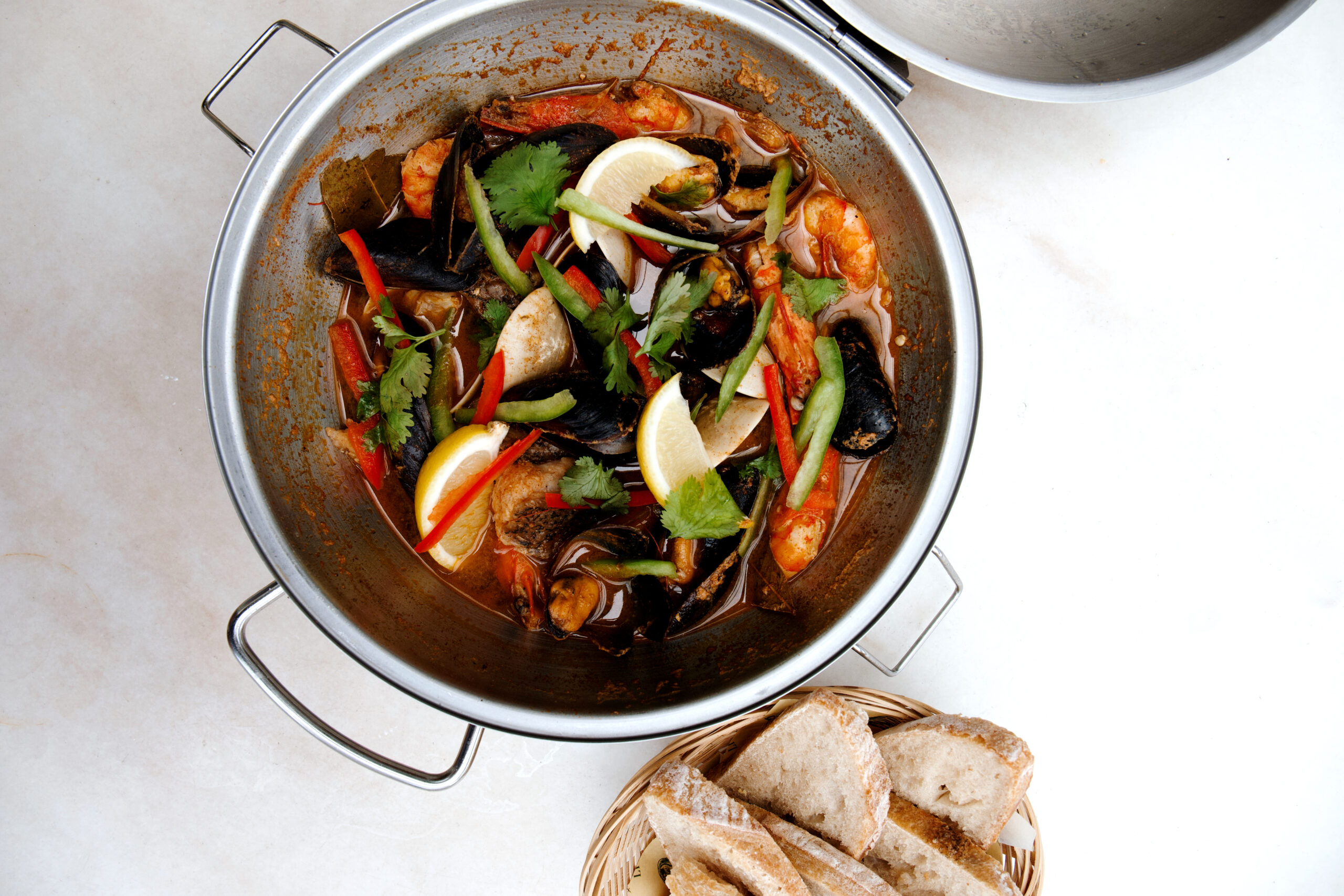
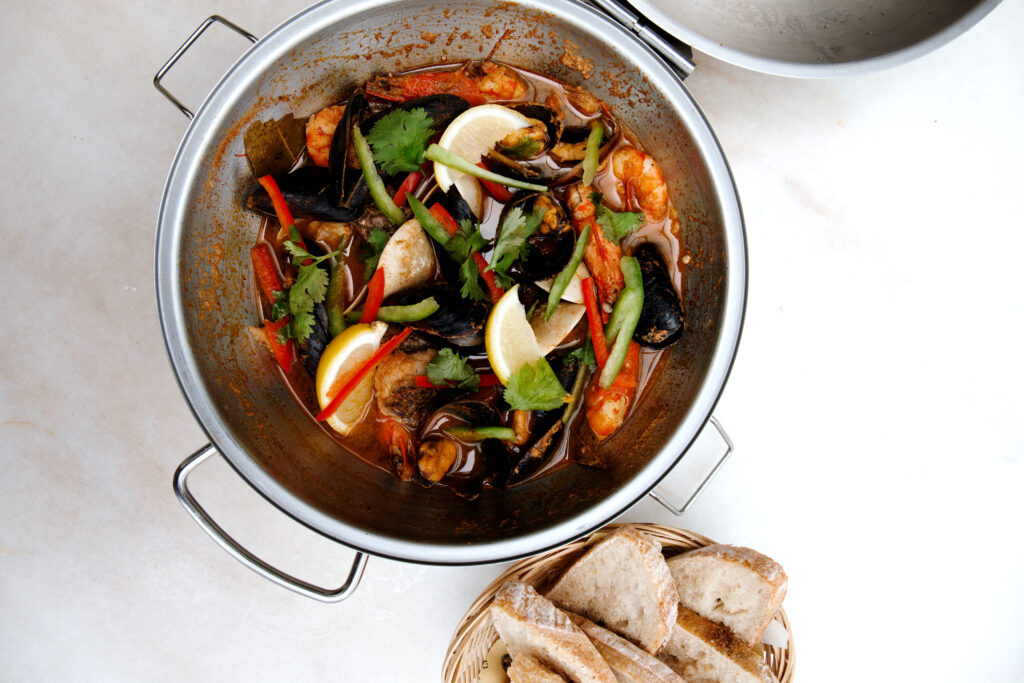
What it is: A clam-shaped copper pot filled with mussels, clams, tiger prawns, and white fish, sealed shut, and steamed over high heat. The lid comes off at the table — the steam carries garlic, white wine, and the unmistakable scent of the Atlantic.
Why it matters: The cataplana pot itself is centuries old, originally Moorish, adapted for Portuguese seafood. The technique seals in every drop of flavour.
Where to try it in KL: At Bartolo’s Central Market location, the cataplana sea stew is on the Specials menu — available for 2 or 4 people. Order an hour ahead if you want it as the centrepiece of a celebration meal.
What it is: A 200g ribeye, pan-seared, served on a hot plate with a fried egg on top, french fries, white rice, and a sauce made of butter, garlic, and white wine that the Portuguese call simply molho de bitoque.
Why it matters: This is what Portugal eats for lunch. Every tasca makes their own version. Often served with a glass of house red, a salad, and bread.
Where to try it in KL: Bartolo’s bitoque uses the family’s secret bitoque sauce. Order it for lunch or dinner — it is one of the most-loved dishes on the menu.
What it is: A multi-layered sandwich from Porto, made with bread, ham, cured turkey ham, ribeye steak, chicken sausage, and pepperoni — all stacked, covered with melted cheese, and drowned in a tomato-and-beer sauce. Served with chips on the side.
Why it matters: Invented in the 1950s in Porto by an emigrant returning from France (hence “little French girl”), it is now Porto’s most famous dish.
Where to try it in KL: Bartolo serves the Francesinha on the Specials menu. It is a serious dish — best shared, or eaten as a complete meal in itself.
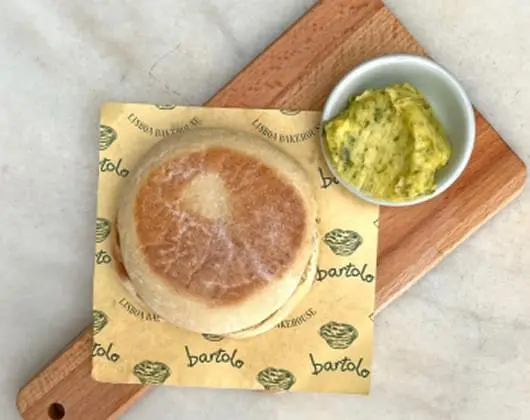
What it is: A round, soft flatbread originally from Madeira, made with sweet potato and wheat flour, traditionally cooked on a hot stone. Served with garlic-and-parsley herbed butter.
Why it matters: It is the bread Portuguese people eat when they want to be transported home. The texture is unlike any other bread — yielding, slightly sweet, comforting.
Where to try it in KL: At Bartolo, bolo do caco with herbed butter is one of the simplest and most-loved items on the menu. Also used as the bun for several sandwich items including the codfish burger and tuna steak.
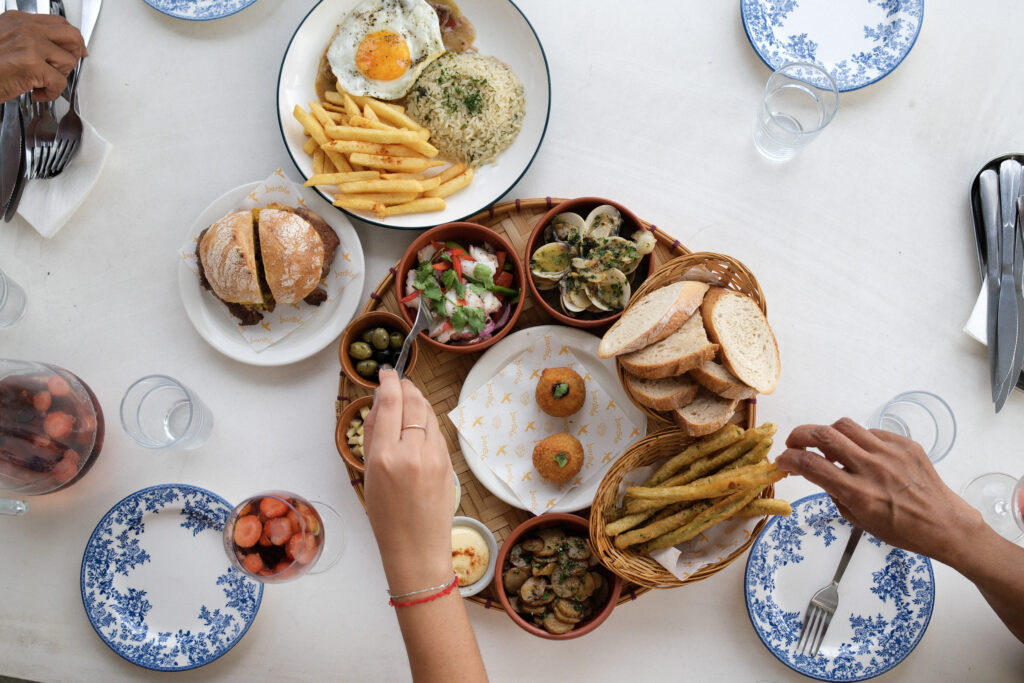
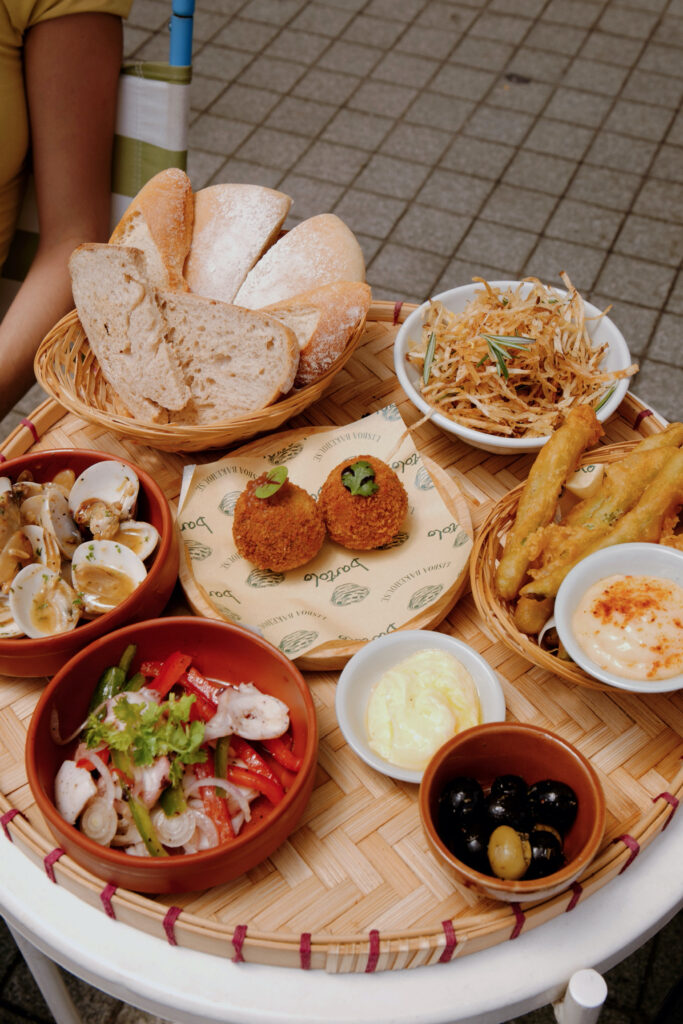
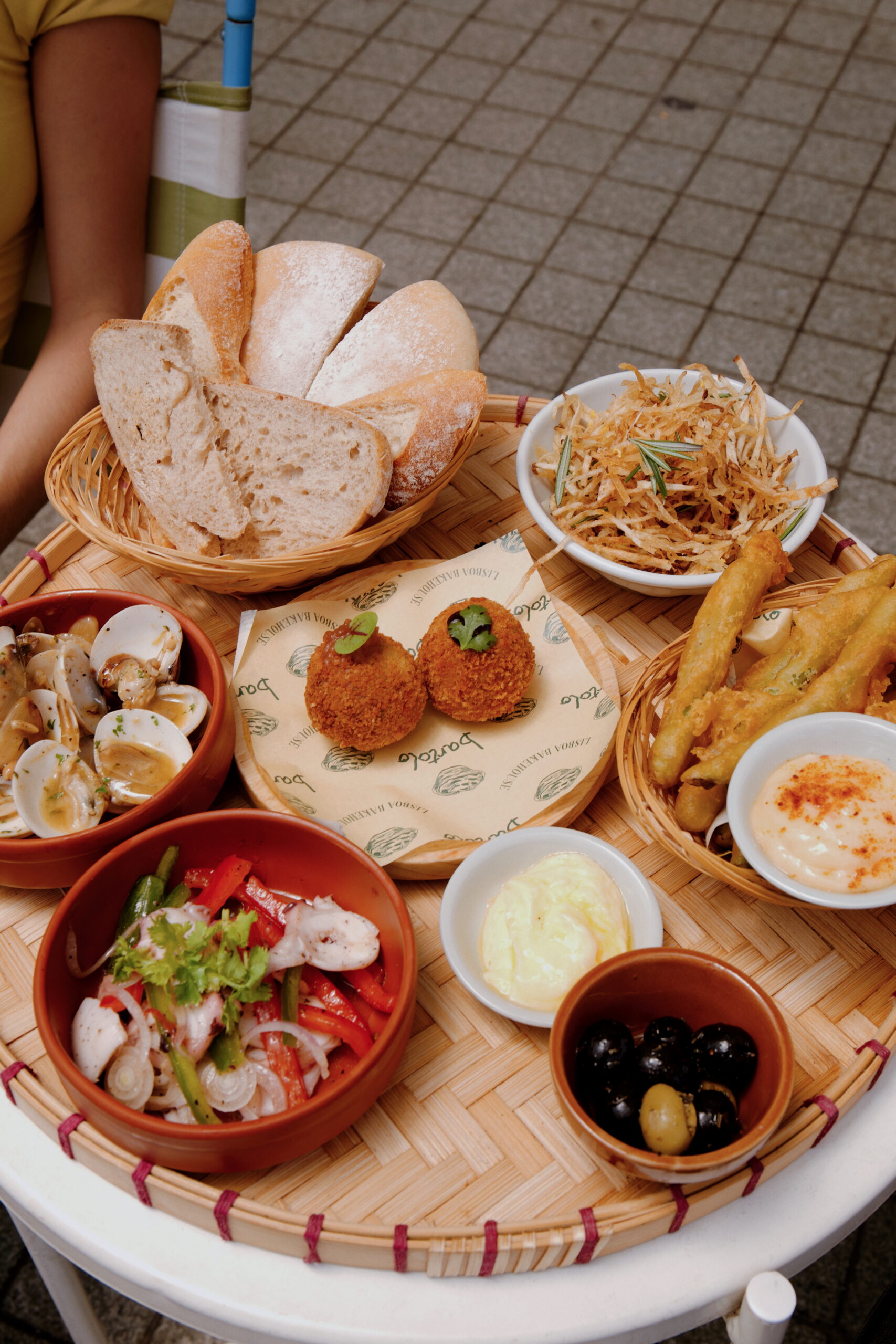
What it is: Not a single dish but a way of eating. A spread of small plates — cured meats, cheeses, marinated olives, fried croquettes, grilled sardines, octopus salad — meant to be ordered in batches and shared around the table.
Why it matters: This is how Portugal actually eats. A tábua de petiscos (literally “petiscos board”) is the centrepiece of a Portuguese meal. It is closer to mezze than to tapas, and far more generous than either.
Where to try it in KL: Bartolo’s Tábua Petiscos is built for groups — bread, octopus salad, clams, croquettes, butter, marinated olives, peixinhos da horta (tempura green beans), matchstick lemon-rosemary fries, all on one board. The right way to start a meal with friends.
If you have one dinner to spend on Portuguese food in KL, here is how to do it properly:
If you are eating alone, simplify: bolo do caco with butter to start, the bitoque for the main, pastel de nata to close. Allow 90 minutes, minimum.
Is Portuguese food spicy? Generally no. The Portuguese use piri-piri (a small chili) for some dishes, but the cuisine is built around herbs (parsley, coriander, bay), garlic, and olive oil rather than heat.
Is Portuguese food healthy? By Mediterranean diet standards, yes — heavy on seafood, olive oil, vegetables, and unprocessed grains. Less butter and cream than French cooking. Portion sizes are honest, not gigantic.
Is Portuguese food halal-friendly? Many dishes are halal-friendly (seafood, vegetable-forward dishes, the bread course). Pork features in several dishes (bifana, some petiscos). Bartolo can accommodate halal preferences for groups — ask when booking.
What is the difference between Portuguese food and Spanish food? They share roots but have evolved differently. Portuguese food is more Atlantic-facing (heavy seafood, salt cod, less rice), more African-influenced (piri-piri from Angola, palm oil), and has its own dessert tradition (egg-yolk-rich doces conventuais). Spanish food is more Mediterranean, more pork-forward, and lighter on bread.
5 min read
A tasca is a Portuguese neighborhood eatery — small, family-run, no pretense. Here is how the tradition works and where to find...
Read Article →
If you ask a Lisbon native where they eat dinner, the answer is rarely a restaurant. It is a tasca. Pronounced TASH-ka, the word describes something Portugal has built its entire eating culture around — a small, family-run eatery where the wine is house wine, the menu changes with the weather, and the host is also the cook.
There is no English equivalent. “Bistro” is too French. “Tavern” implies more drinking than eating. “Hole-in-the-wall” gets the size right but misses the warmth. So we say tasca and let the word do its own work.
The word tasca is thought to come from the Latin tasca, meaning a measure or portion — likely referring to the small portions of food and wine served in these places. They emerged in working-class neighbourhoods of Lisbon and Porto in the 19th century, originally as places where labourers could buy a glass of wine and a plate of grilled sardines for almost nothing on the way home from work.
Over time, the tasca became something more cultural than economic. It is where families eat on Sundays. Where neighbours meet. Where the food does not change because there is no reason to change it — the bacalhau à brás has been right since the 1950s, and the moelas (chicken gizzards in tomato stew) was perfected by someone’s grandmother who is no longer here to ask.
| Restaurant | Tasca |
|---|---|
| Trained chef | The owner cooks |
| Printed menu | A blackboard, often updated daily |
| Reservations expected | Walk in, sit down |
| Tablecloths | Bare tables, sometimes paper |
| Wine list | House red and house white |
| Tasting menu | Maybe seven dishes total, all great |
| Quiet, refined | Loud, conversational |
A tasca is not “casual fine dining.” It is something earlier than that distinction — closer to eating in someone’s living room than in a commercial space. The pleasure is in the lack of pretense.
The menu of a true tasca is small and hyper-traditional. You will see most of these:
The drinks list is just as short: house red, house white, vinho verde (a young, lightly fizzy white from the north), beer, espresso, and Portuguese aguardente or port if it is late.
For a long time, KL did not have a true Portuguese tasca. There were Portuguese-Eurasian restaurants in Melaka, but those reflect a 500-year-old cultural blend — different food, different mood, equally beautiful. What was missing was the Lisbon-style tasca: small, family-run, recipe-driven, with proper petiscos and a counter you could lean on with an espresso.
Bartolo Lisboa Bakehouse at Central Market was built with that gap in mind. The team set out not to recreate fine Portuguese dining, but to recreate the everyday Portuguese eating culture — the rhythm of a meal that opens with breads and dips, moves through petiscos, and lingers over coffee and a pastel de nata.
You can see it in the small details: the heavy ceramic plates. The azulejo tile work on the walls. The choice to serve moelas & grapes at all (a very tasca dish, almost never on Western menus). The tábua de petiscos sharing board for groups. The way the menu lists vinho verde before any other wine.
The full menu is here — but it reads better in person, with someone walking you through what is fresh that day.
Two unspoken rules:
If you visit Bartolo, do this: order the Tábua Petiscos (the sharing board), pour a glass of vinho verde, eat slowly, and stay for an espresso and a pastel de nata. You have done it right.
How do you pronounce tasca? TASH-ka. The “s” sounds like “sh” in standard European Portuguese.
Is a tasca the same as Spanish tapas? No, but they are cousins. Spanish tapas are small individual plates served with drinks, often in bar-hopping style. Portuguese petiscos are similar small plates, but a tasca is a kind of restaurant — a setting — rather than a way of eating.
Are tascas only in Portugal? Traditionally yes — but the tradition has spread to a few cities with strong Portuguese diasporas (London, Toronto, Boston) and, more recently, to KL.
Do tascas take reservations? In Portugal, rarely. Just walk in. In KL at Bartolo, walk-ins are welcome and reservations help during weekend dinner.
What should I order on a first visit? Bread with dips, the croqueteria selection (small fried bites), one petisco like moelas or gambas à guilho, one main like bacalhau à brás, and finish with pastel de nata and espresso.
5 min read
Discover what makes a true pastel de nata, why Lisbon's recipe is unmatched, and where to find the best version of Portugal's...
Read Article →
It is a small thing, this tart. The size of a coin pressed flat. Crisp, blistered, golden brown on top — and inside, a custard so rich it almost trembles when you bite in. The Portuguese have been making pastel de nata for nearly four centuries, and in every café from Lisbon to Porto you will find people eating one with a strong espresso, almost as a ritual.
If you live in Kuala Lumpur and you have not yet tried a properly made pastel de nata, this guide is for you.
A pastel de nata (plural: pastéis de nata) is a Portuguese egg-custard tart made with a flaky, multi-layered puff pastry shell and an egg-yolk-rich custard filling that is baked at very high heat. The intense heat caramelises the surface — those characteristic dark spots are not burns, they are the sign of a properly made nata.
The word pastel simply means pastry. Nata means cream. Together, “cream pastry” — but the name does not begin to describe the texture.
A great pastel de nata has three things working together:
The story begins in the early 1800s at the Mosteiro dos Jerónimos, a monastery in the Belém district of Lisbon. The monks needed egg whites to starch their habits and clarify wine. The leftover yolks went into pastries — and over time the nuns and monks of Portugal turned this surplus into an entire genre of sweets called doces conventuais (conventual sweets).
When the monastery closed in 1834, the recipe passed to a nearby sugar refinery, and from there to a bakery that still operates today: Pastéis de Belém. Their version uses the original recipe, kept secret to this day. Every other pastel de nata in Portugal is, technically, a respectful imitation.
This is one of the most-Googled questions about Portuguese pastry, and the answer is simple:
In flavour and form, they are essentially the same dish. Some people say the Belém version has a slightly thicker crust and a less sweet custard. Most people, blindfolded, cannot reliably tell the difference.
There are conventions in Portugal that elevate a pastel de nata from “snack” to “small ritual”:
For most of the last decade, pastel de nata in KL meant a frozen import or a pale supermarket version. That has changed.
Bartolo Lisboa Bakehouse at Central Market bakes pastel de nata fresh every morning to an authentic Lisbon recipe — flaky shell, just-set custard, blistered tops. The same recipe is used at the Bangsar location (BSC).
What sets it apart locally:
You can view the full pastel de nata range on the menu or order in bulk via WhatsApp.
Beyond the classic, Portuguese bakeries have started experimenting. The most successful variations preserve the original custard:
What does pastel de nata taste like? Rich egg custard, lightly sweet, with a flaky, slightly salted pastry shell. The caramelised top adds a faint bitterness that balances the sweetness — like a high-end crème brûlée in pastry form.
Is pastel de nata gluten-free? No. The pastry uses wheat flour. Gluten-free versions exist but are rare and the texture is different.
Can I freeze pastel de nata? Yes — best eaten within a month. Reheat in a hot oven (220°C) for 5 minutes to restore the crisp shell. Microwave makes the pastry soggy.
What is the best time of day to eat one? Mid-morning in Portugal — with espresso. In KL, anytime — but warm from the oven is always best.
How is pastel de nata pronounced? Pa-SHTEL de NA-tah (Portuguese pronunciation). The plural pastéis de nata is pa-SHTAY-iss de NA-tah.
2 min read
From the iconic pastel de nata to grandmother’s pao-de-lo, a tour of the Portuguese sweets we bake every morning at Bartolo.
Read Article →
If there is a single image that captures Portuguese baking, it is the pastel de nata — that small, perfect tart of flaky, blistered pastry cradling a custard set with caramelised egg yolk. At Bartolo, we bake them fresh every morning to a recipe that traces its lineage back to the convents of Lisbon, where nuns famously used egg yolks for sweets after the whites had been spent starching their habits.
But the world of Portuguese desserts is far broader than the nata. Step into our display counter on any given morning and you might find pão-de-ló, a sponge cake so rich and yielding it almost trembles when you cut it — ours is finished with truffle olive oil and fleur de sel, a Bartolo twist that honours the tradition while bending it toward the present.
Many of these recipes belong to a tradition Portuguese pastry chefs call doces conventuais — conventual sweets. They are heavy with eggs, sugar, almonds, and time. The almond tart, the toucinho do céu (literally “bacon from heaven”), the queijadas of Sintra — each carries the fingerprint of a particular region and the patience of a slower era.
We treat these recipes with the same reverence we bring to our breads and our mains. The flavours are bold; the textures are uncompromising. But every dessert that leaves our kitchen is meant to feel like the one your grandmother might have made — if your grandmother had grown up in Lisbon and known exactly when to pull the tart from the oven so the top blistered just so.
Come by in the morning for the warm ones. They taste different straight out of the oven — and we think that’s worth getting out of bed for.
2 min read
Why we still cook the way our grandmothers did — and the small ways Bartolo bends those traditions toward Kuala Lumpur.
Read Article →
Walk into a Portuguese kitchen and you find very few shortcuts. Sauces are reduced, never thickened. Bread is torn, never sliced. The cataplana sits over the flame for as long as the seafood needs, and not a minute less. At Bartolo, we have built a menu around that patience.
Our bitoque — a 200g ribeye finished with the family’s secret bitoque sauce, served over rice and french fries — is exactly the dish you would find in a quiet tasca off a side street in Por
to. Our francesinha takes hours to assemble: ribeye, cured turkey ham, chicken sausage, pepperoni, all layered into bread and drowned in a tomato-and-beer sauce that is closer to alchemy than recipe.
Many of these dishes came to us through grandmothers and aunties who learned them in their own grandmothers’ kitchens. We didn’t invent the cataplana, the bacalhau à brás, the moelas & grapes — we inherited them. Our role is to cook them honestly, with the right ingredients, and to plate them in a way that lets a guest in Kuala Lumpur taste exactly what a guest in Lisbon would taste.
Tradition does not mean rigidity. We use locally caught seafood when it makes the dish better. We adapt portion sizes for sharing, because that is how our guests love to eat here. But the spine of every recipe — the technique, the timing, the soul of it — is unchanged.
That is what we mean by tradition on every plate.
2 min read
Sharing, lingering, and the rhythm of a Portuguese meal — what makes a tasca different from a restaurant.
Read Article →
To eat the Portuguese way is to surrender your watch at the door. A meal isn’t a transaction; it is a slow, generous opening of plates — one after another — until the table is a small landscape of breads, olives, cured meats, and conversation. We call this style of eating petiscos, and it sits at the heart of what we do at Bartolo.
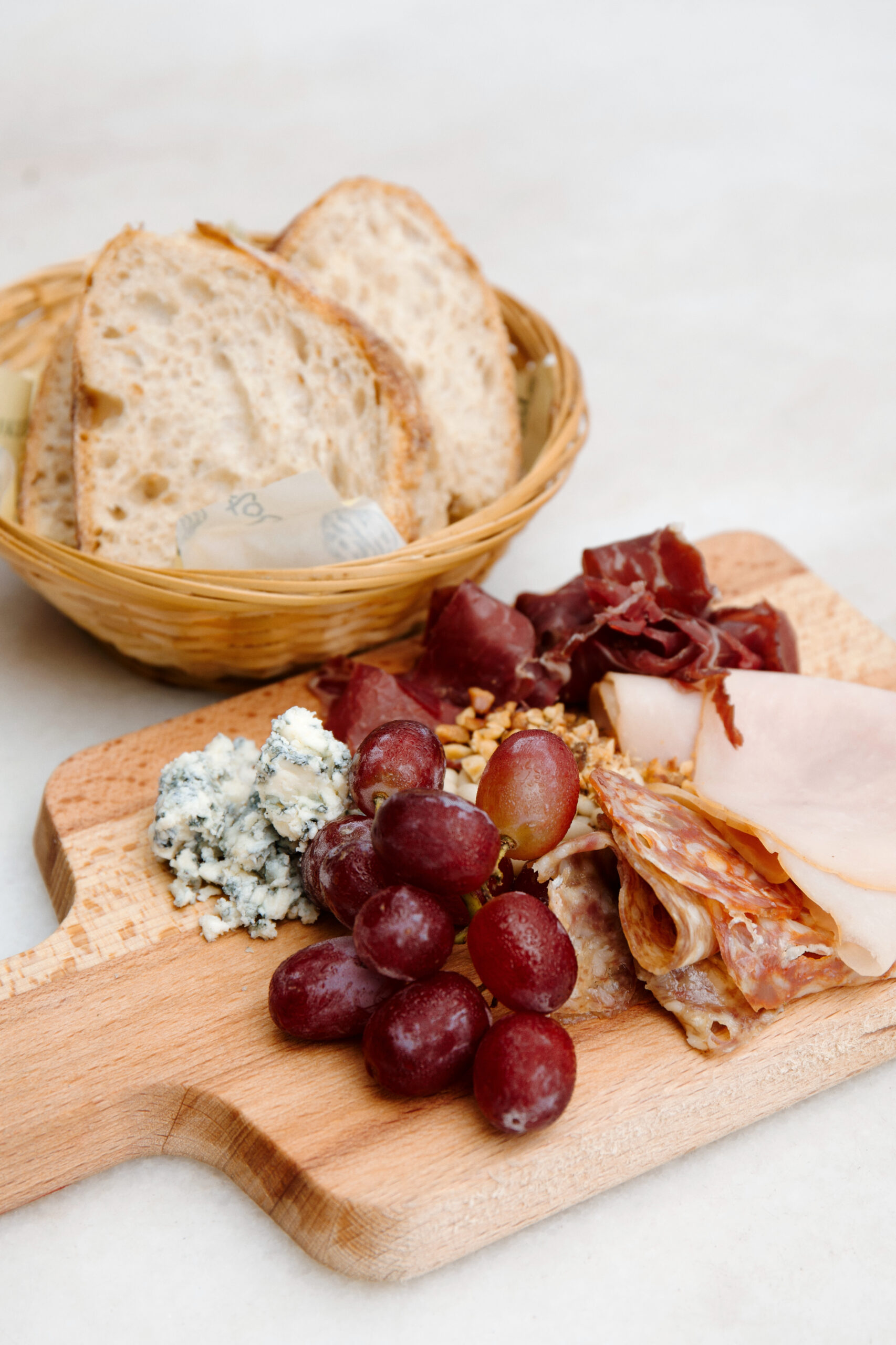
Petiscos are Portugal’s answer to tapas, but with their own quieter, richer character. A wedge of queijo da serra, sliced almonds, a sliver of presunto. Codfish fritters straight from the fryer. A bowl of moelas — chicken gizzards stewed in tomato — that you scoop up with bread without ever putting your fork down.
The Portuguese word tasca describes the kind of place where this culture thrives. A tasca is small, unfussy, family-run. The wine is house wine; the menu changes with the weather; the host is also the cook. There is no pretense and there is no rush. People come to be fed, but also to be among each other.
We built Bartolo with that spirit in mind. The tile work, the warm lighting, the heavy ceramic plates — these are not just decoration; they are an invitation to behave a certain way. Order more than you think you can finish. Stay longer than you planned. Order another coffee. Let the conversation outlast the food.
The Portuguese have a word for that lingering after a meal: sobremesa. It literally means “over the table” — that stretch of conversation when the dishes are cleared but no one wants to leave. We hope you find some of yours here.
2 min read
Inside the Bartolo kitchen — the small, slow choices that turn a recipe into a dish.
Read Article →
Most of what makes a dish at Bartolo memorable happens long before it reaches your table. Our breads begin the night before, with sourdough that ferments slowly to develop the depth that makes the crust crackle. Our dips — the romesco, the pesto, the herbed butter — are made fresh in-house, in small batches, every morning.
We don’t buy pre-made stocks. We don’t open jars of sauce. The sangria you drink in the afternoon was steeping in our kitchen at sunrise. The custard for the natas is whisked by hand. These choices add hours to our day, and they are the only reason the food tastes the way it does.
We source local where we can and import where we must. Our sardines are cured in-house using a recipe handed down from the Algarve coast. Our beef for the bitoque comes from suppliers we have known for years. The alheira sausage in our brunch — smoked poultry and beef seasoned the traditional way — is one of the few things we still bring in directly from a producer in northern Portugal, because no one else makes it quite right.
Behind every plate is a cook who understands what the dish is supposed to feel like. That can’t be written into a recipe; it has to be taught, shift after shift. Our team trains together, eats together, tastes together. When a new dish goes on the menu, the whole kitchen has tasted it twenty times before a guest ever sees it.
This is the unglamorous, slow work of crafting food we are proud to serve. It is also the reason we look forward to opening every morning.
2 min read
A pour-by-pour guide to the Portuguese wines on our list — from crisp Vinho Verde to the deep reds of the Douro.
Read Article →
Portugal makes some of the most distinctive and underrated wines in the world. Tucked between the Atlantic and the mountains, its vineyards grow grape varieties — Touriga Nacional, Alvarinho, Baga, Encruzado — that you will find almost nowhere else. At Bartolo, our wine list is built to take you on a tour of these regions, one glass at a time.
We start in the north, with Vinho Verde — a young, lightly effervescent white from the Minho region. It is refreshing, low in alcohol, and pairs beautifully with petiscos and seafood. From there we travel south through the Dao and Bairrada regions, whose reds offer bright fruit and surprising elegance.
Our reds are anchored by the Douro Valley, the steep terraced vineyards along the Douro River that produce both Port and some of the world’s most ageworthy table wines. A Douro red made from the same grapes that go into Vintage Port is a thing to behold — deep, structured, layered with dark fruit and subtle spice. It is the wine to drink with our cataplana or our bitoque.
For those who like their wines bigger and bolder, we also pour from the Alentejo, the warm plains of southern Portugal. These wines are sun-soaked, generous, and pair effortlessly with grilled meats and sharing plates.
And for an after-dinner moment, ask about our small selection of Ports — Tawny, Ruby, sometimes a Late Bottled Vintage. A small glass alongside a pastel de nata is one of the simplest pleasures in Portuguese cuisine. We’d love to pour one for you.
2 min read
From the Atlantic to your plate — the seafood traditions Bartolo brings from the Portuguese coast to Kuala Lumpur.
Read Article →
Portugal has the longest coastline in continental Europe, and seafood has been at the heart of its cooking for as long as anyone can remember. From the rugged northern fishing villages to the warm waters of the Algarve, every region has its own specialty — and those specialties are the backbone of our menu at Bartolo.
Our most-loved seafood dish is the cataplana — a copper clam-shell pot, sealed shut and set over high heat, that turns mussels, clams, tiger prawns, and grouper into something greater than the sum of its parts. When the lid comes off at your table, the steam carries garlic, white wine, and the unmistakable scent of the sea.
No conversation about Portuguese seafood is complete without bacalhau — salted cod. The Portuguese famously claim to have a different bacalhau recipe for every day of the year, and at Bartolo we serve a few of them: bacalhau à brás, the classic with shredded cod, eggs, matchstick fries, and black olives; the spiritual codfish, baked with carrots in a creamy sauce; and our codfish burger, served on a squid-ink bolo do caco.
We also serve dishes that are quieter on the menu but no less essential. Our housemade canned sardines are cured and marinated in-house using wild-caught fish. Our gambas à guilho — tiger prawns swimming in garlic butter — arrive sizzling, the kind of small dish that turns a meal into an event.
None of this would be possible without good sourcing. We work closely with local suppliers to get fish that is as fresh as the Portuguese coast and as honest as the recipes that have been carrying it for generations.
As Featured In